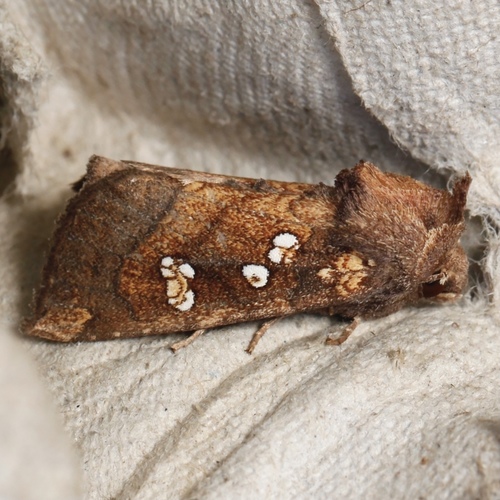
Papaipema duovata Bird, 1902 is a animal in the Noctuidae family, order Lepidoptera, kingdom Animalia. Not known to be toxic.

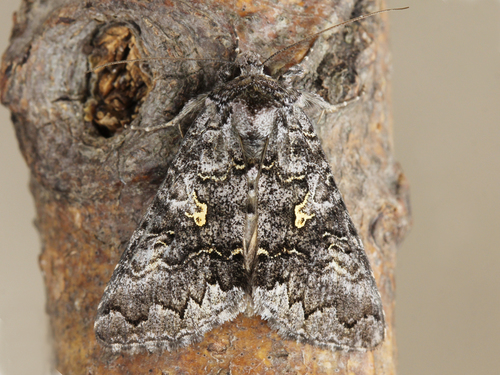
Photo of Papaipema duovata Bird, 1902 (Papaipema duovata Bird, 1902)
🦋 Animalia

Papaipema duovata Bird, 1902

Papaipema duovata Bird, 1902

Papaipema duovata, the seaside goldenrod borer, is a North American native moth that is threatened in Connecticut.

Family
Genus
Papaipema
Order
Lepidoptera
Class
Insecta

About Papaipema duovata Bird, 1902

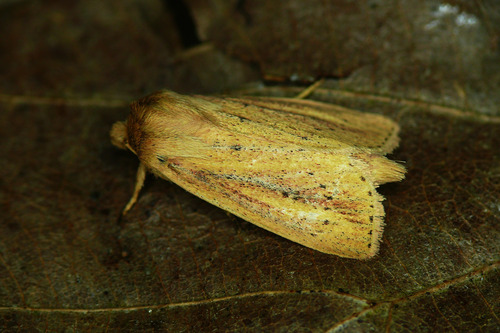
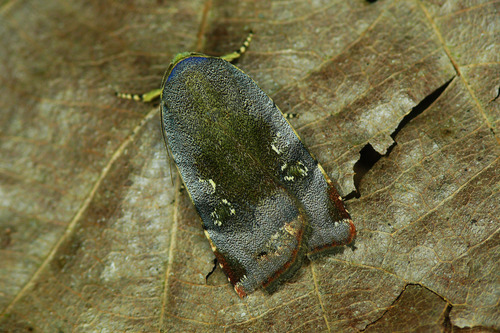
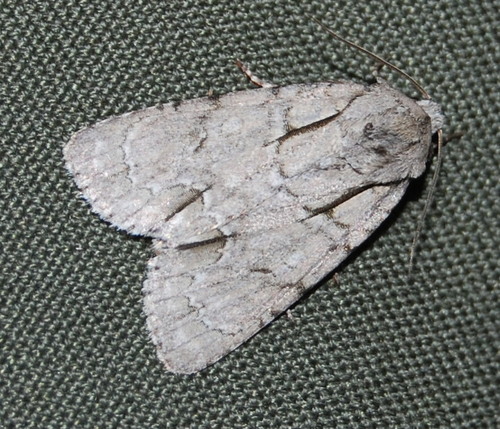
Papaipema duovata, commonly known as the seaside goldenrod stem borer or seaside goldenrod borer, is a species of moth native to North America. It is found in the coastal plain along the eastern side of the continent, ranging from the Gulf Coast north to at least New Jersey. This moth species was formally described by Henry Bird in 1902, and its scientific name is Papaipema duovata Bird, 1902. The species is classified as threatened in the U.S. state of Connecticut. This moth has an approximate wingspan of 36 mm. Adult individuals are dusky brown in color. They feature white reniform, orbicular, and claviform spots, along with dull yellow basal spots. Adults are most active and on wing primarily during October. The larvae of this species bore into the stems of Solidago sempervirens.
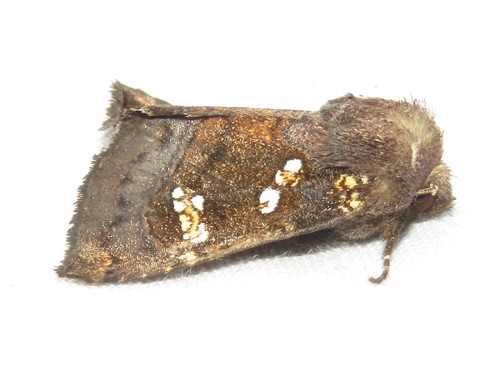
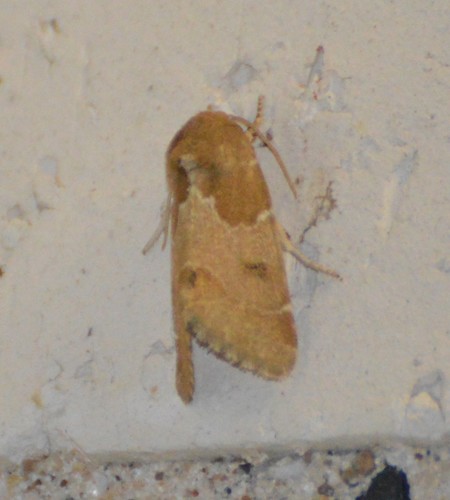
Photo: (c) blocky, all rights reserved, uploaded by blocky

Taxonomy

Animalia Arthropoda Insecta Lepidoptera Noctuidae Papaipema

More from Noctuidae

Sources: GBIF, iNaturalist, Wikipedia, NCBI Taxonomy · Disclaimer

Identify Papaipema duovata Bird, 1902 instantly — even offline

iNature uses on-device AI to identify plants, animals, fungi and more. No internet needed.

Download iNature — Free

Start Exploring Nature Today

Download iNature for free. 10 identifications on us. No account needed. No credit card required.

Download Free on App Store