About Pantherophis emoryi (Baird & Girard, 1853)
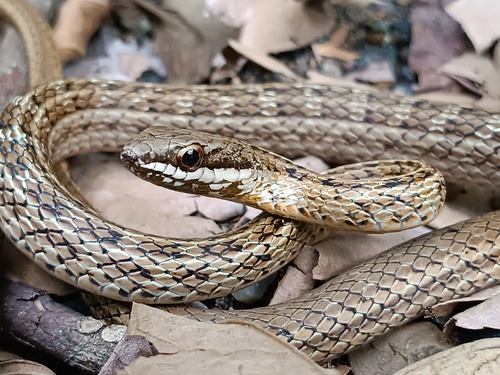
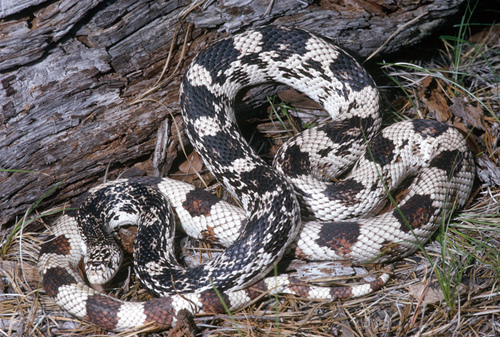
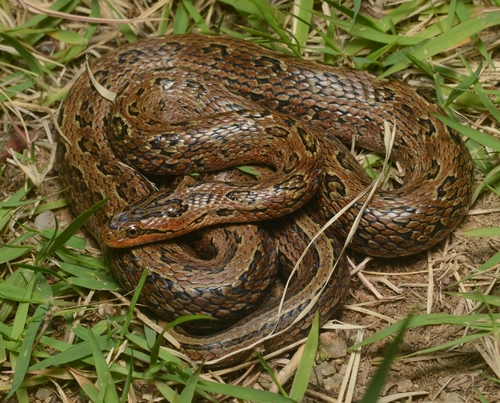
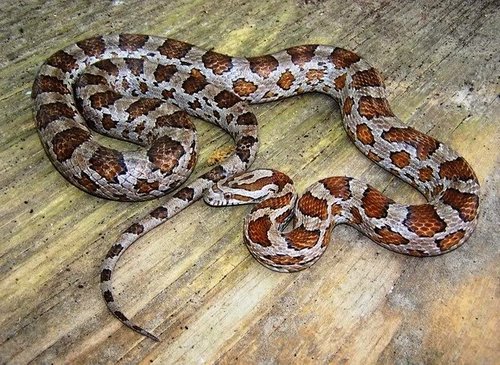
The Great Plains rat snake, Pantherophis emoryi, is typically light gray or tan, with dark gray, brown, or green-gray blotching running down its back, and stripes on either side of the head that meet to form a point between the eyes. It can reach a total length of 3–5 feet (0.91–1.52 m), including the tail. This species prefers open grassland or lightly forested habitats, but also occurs in coastal plains, semi-arid regions, and rocky, moderately mountainous regions. It is often found on farmland, which frequently leads to it being incorrectly called a chicken snake. It favors areas with relatively high rodent populations, as rodents make up its primary diet. It will also eat birds, and occasionally snakes, lizards, and frogs, and it subdues all of its prey by constriction. The Great Plains rat snake is primarily nocturnal and oviparous, laying clutches of up to 25 eggs in late spring. Like most rat snakes, it will shake its tail vigorously when agitated. The motion itself does not produce noise, but when the snake shakes its tail among dry leaf litter, the resulting sound is remarkably similar to a rattlesnake, which often causes it to be misidentified. Unusually for a nocturnal animal, the Great Plains rat snake tends to stay still for most of its active time. On average, it only moves 188 m (617 ft) per day. The yellow-bellied racer Coluber constrictor flaviventris, a snake that often shares the same habitat, moves more often than the Great Plains rat snake. This difference in mobility could cause a population decline for the Great Plains rat snake, as it is less mobile. Visible warning signs of agitation include curling the body tightly and rapidly shaking the tail. While Pantherophis emoryi has very small teeth, is nonvenomous, and is generally a calm, non-aggressive species overall, it will bite when threatened.