About Panolis flammea (Denis & Schiffermüller), 1775
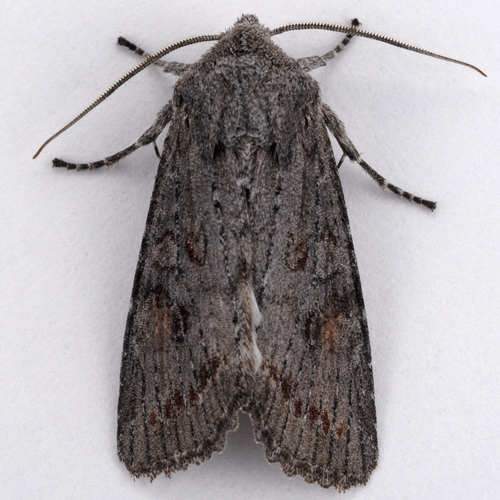
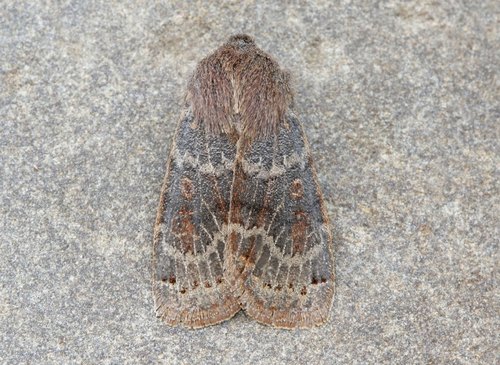
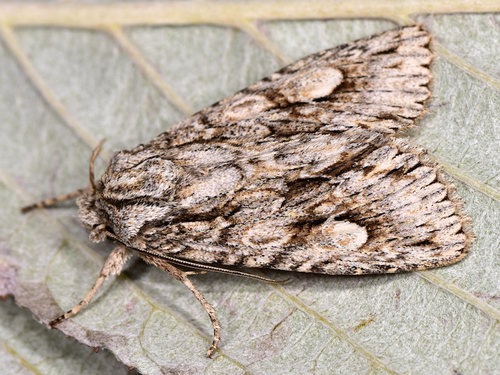
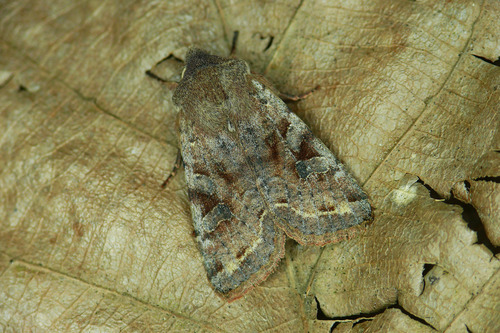
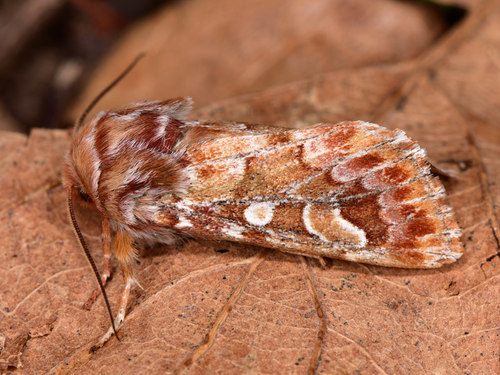
Panolis flammea (Denis & Schiffermüller), 1775 has a wingspan of 32–40 mm. Its forewings are orange-rufous with some added ochreous coloring. The veins are dotted with grey and white; the inner and outer lines are a deeper rufous shade, edged oppositely with white, and shaped as dentate lunulate. The submarginal line is pale, preceded by a dentate rufous shade. The terminal area is often paler. The stigmata are large and irregular. The claviform stigma has pale and brown scales at its tip. The orbicular and reniform stigmas are pale rufous with deeper colored centers. The orbicular stigma is flattened, its lower edge is often extended along the median vein as a streak, and it is connected to the reniform stigma. The reniform stigma is large, with its upper end extended angularly outwards. The fringe is mottled with rufous and white. The hindwing is fuscous, often with a reddish tinge. The aberration griseovariegata Goeze has rufous tints obscured by glaucous grey and fuscous. Recorded food plants for this species are: Abies (fir), Betula (birch), Chamaecyparis, Juniperus (juniper), Larix (larch), Picea (spruce), Pinus (pine), Pseudotsuga (Douglas-fir), and Quercus (oak). Reference: Robinson, G. S. et al.