About Panicum effusum R.Br.
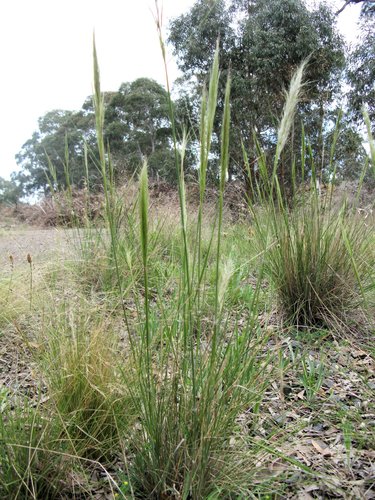
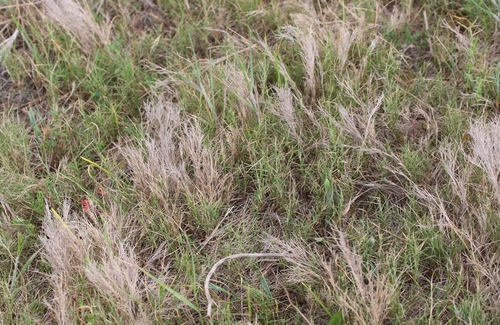
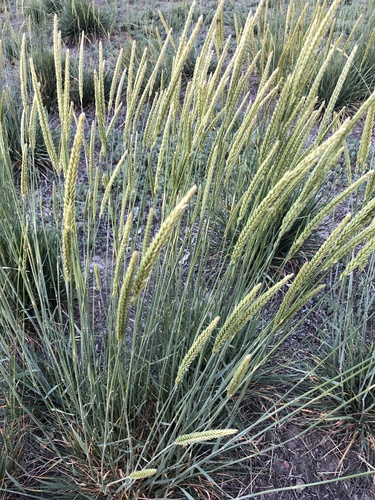
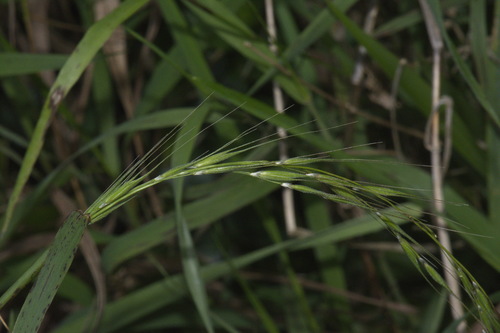
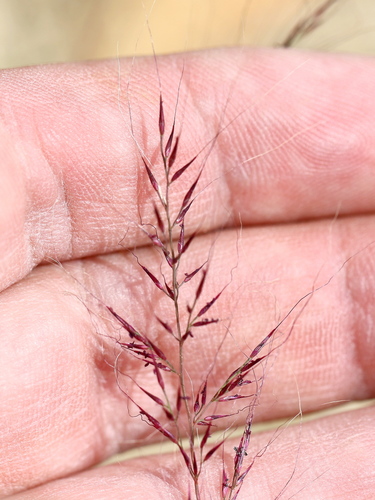
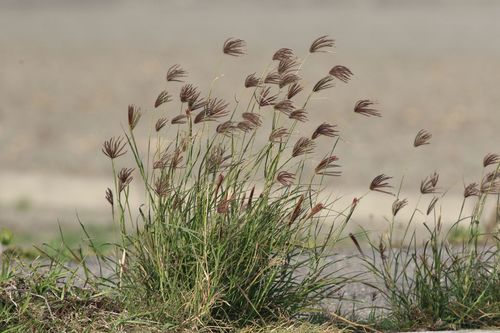
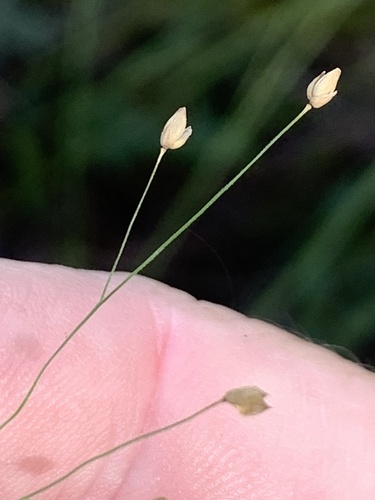
Panicum effusum R.Br., commonly known as hairy panic, is a perennial grass species that grows to a height of 70 centimetres (28 inches). Its leaves bear hairs that grow from tubercle bases, and reach between 5 and 30 centimetres (2.0 to 11.8 inches) in length and 0.4 to 1 centimetre (0.16 to 0.39 inches) in width. The plant’s seed spikes are typically 5 to 50 centimetres (2.0 to 19.7 inches) long, with individual spikelets measuring 2 to 3 millimetres (0.079 to 0.118 inches) long. This species is found across Australia, with a larger concentration in eastern Australia, and also in Papua New Guinea. Hairy panic grows on low- to medium-nutrient clay soil over shale or conglomerate, and occurs in a wide range of Australian ecoregions: shrubland, grass downs, tropical savanna, desert, woodlands, lowland rainforest, tropical rainforests, montane grasslands, sub-alpine grassland, mangroves, xeric scrub, and temperate rainforests. Due to its large range, abundant population, and stable population numbers, hairy panic is classified as Least Concern on the IUCN Red List, and may actually be growing more abundant over time. Panicum effusum produces a dry, single-seeded, indehiscent fruit that is eaten by stubble quail. Its seeds are primarily dispersed by wind, but can also be transported in mud stuck to cars. This plant flowers in the summer. It is highly drought-tolerant, but sensitive to frost. As a fast-growing grass, it becomes a tumbleweed under extremely dry conditions, an adaptation that evolved to help it disperse seeds. This tumbleweed form can become a nuisance in residential areas when grass stalks accumulate in large quantities. In February 2016, large numbers of hairy panic tumbleweeds invaded the town of Wangaratta, Victoria, where piles reached as high as building roofs in some locations. Some residents blamed the incident on a local farmer who failed to maintain their paddock. Hairy panic uses C4 carbon fixation, which gives it a growth advantage in drought and high temperature conditions. Hairy panic is a common component of pastures, though it is not usually abundant in these habitats. It has moderate nutritional value for livestock. When sheep consume large quantities of hairy panic within 2 to 6 weeks after rain, they can develop photosensitivity and a fatal condition called yellow-bighead. Hairy panic also has value as a traditional bush food: its seeds can be ground into flour and baked. While the plant produces plenty of seeds, they can be difficult to collect.