About Panicum decompositum R.Br.
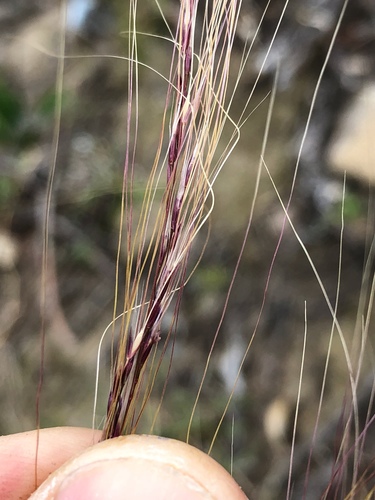
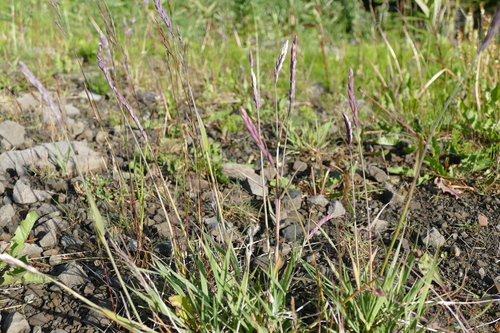
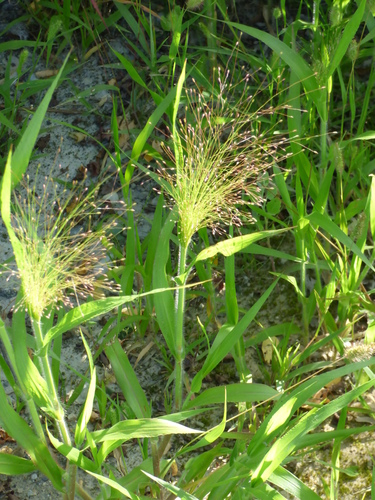
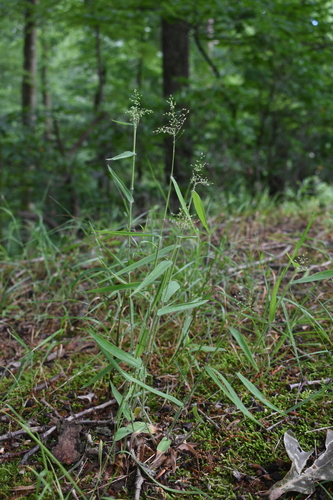
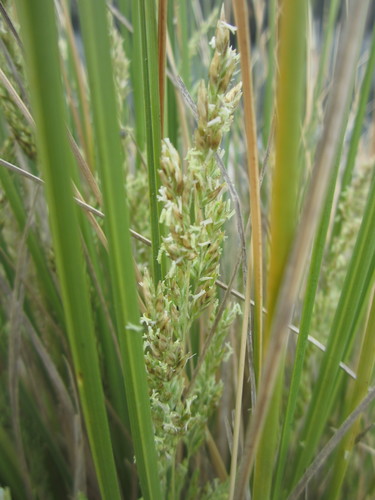
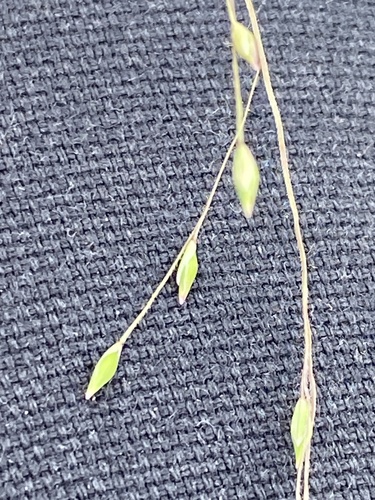
Panicum decompositum R.Br., commonly called native millet, is a C4 tussock-forming perennial grass. Its leaves are glabrous, blue-green, and blade-shaped, with a pale line down the center of the upper leaf surface, and a protruding spine called a keel on the lower leaf surface. This grass grows up to 145 cm tall, and its seed heads can reach approximately 40 cm in length. Native millet is hermaphroditic, meaning each individual flower contains both male and female reproductive organs. Its seed head is an open panicle, made up of many small branches loosely clustered together. A spikelet grows at the end of each small branch, which flowers and matures to produce seeds. This species flowers in summer and autumn, which corresponds roughly to December to May in Australia, and it is primarily pollinated by wind. Like other grasses, native millet grows fibrous roots that hold surrounding soil in place to prevent erosion. These fibrous roots also increase total soil biomass, create a habitat for microorganisms, and support filtration of chemical compounds like fertilisers and pesticides from water runoff. There are two recognised varieties of native millet. P. decompositum var. decompositum is native and found only in the state of Victoria, Australia, while P. decompositum var. tenuis occurs across all other Australian mainland states, most commonly the Northern Territory, Queensland, South Australia, and New South Wales. Very few sightings of this variety have been recorded in South Australia, and neither variety has been found in Tasmania. Native millet is an intermediate species in alluvial Mitchell grasslands of Western Australia's Kimberly region. Mitchell grasslands have characteristic black soil formed from high levels of clay and silt. Native millet can tolerate a wide range of soil types, but it prefers wetter alluvial soils with high clay and sand content. It grows widely and evenly across pastures, rather than forming dense dominant stands or isolated bushes. It is resistant to both drought and flooding; it can survive prolonged flooding with minimal impact on normal plant growth, with only seedling growth slowed. Native millet is sensitive to frost. It typically hays off or stops seed production prematurely during winter, but can quickly repopulate again in spring. Some other species in the Panicum genus, such as Panicum dichotomiflorum, are known to cause hepatogenous photosensitisation in ruminant livestock like sheep. This condition develops when phylloerythrin, a photosensitising agent, builds up in the gut and reaches the skin, triggering a phototoxic reaction that causes skin burning, blisters, or lesions. Due to its relation to these photosensitisation-causing species, P. decompositum has been suspected to be poisonous, but no confirmed cases of toxicity have ever been recorded.