About Panicum coloratum L.
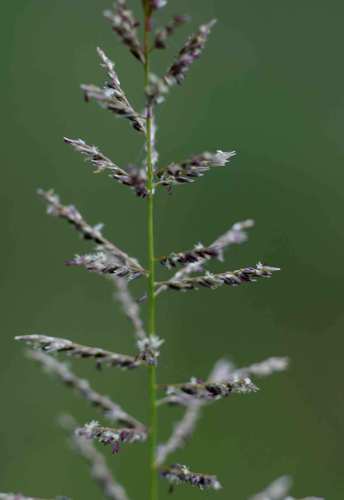
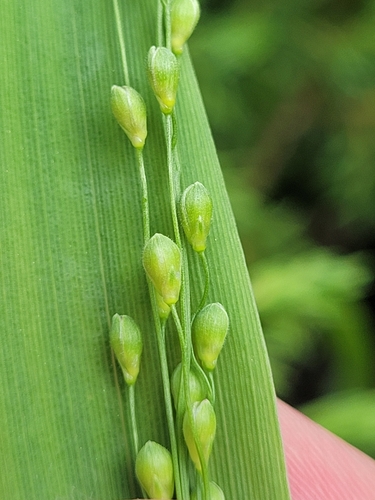
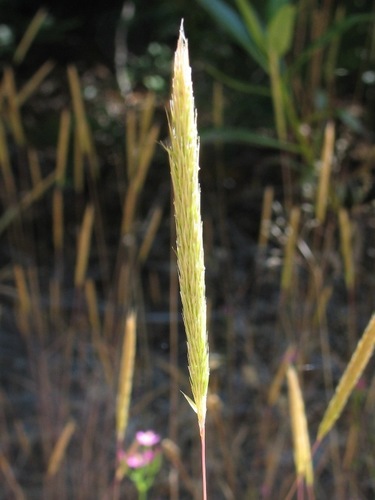
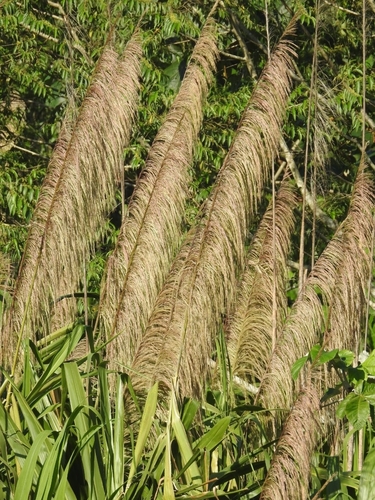
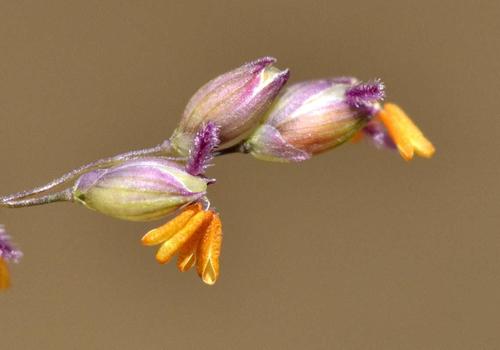
Panicum coloratum is a grass species that goes by multiple common names: kleingrass, blue panicgrass in the United States, white buffalograss in southern Africa, and Bambatsi panic, makarikari grass, and coolah grass in Australia. It is native to Africa, and has been introduced to other regions including the United States and Australia, where many cultivars have been bred. This species varies in appearance, but it is generally a perennial bunchgrass that usually grows rhizomes. Its firm, mostly upright stems can reach up to 1.4 meters (4.6 feet) tall. Its leaf blades measure 10 to 30 centimeters (3.9 to 11.8 inches) long, and range in color from green to waxy blue-green. Its panicles vary in length, and its spikelets are green and purple. Panicum coloratum is used as pasture grass and for producing hay. It produces large volumes of forage for animals, is drought-tolerant, and grows well in hot climates. As a C4 plant, it can grow on saline soils and requires some sodium for effective photosynthesis, and different cultivars have differing levels of sodium tolerance. While it provides good forage for most animals, it has occasionally been linked to liver damage and photosensitivity in young ruminants and horses. This photosensitivity can cause sunburn that leads to swelling of the animal's head and ears, a condition commonly known as "swellhead". Known cultivars of this species are 'Pollock', 'Bambatsi', 'Bushman Mine', 'Verde', and 'Kabulabula'.