About Panicum amarum Elliott
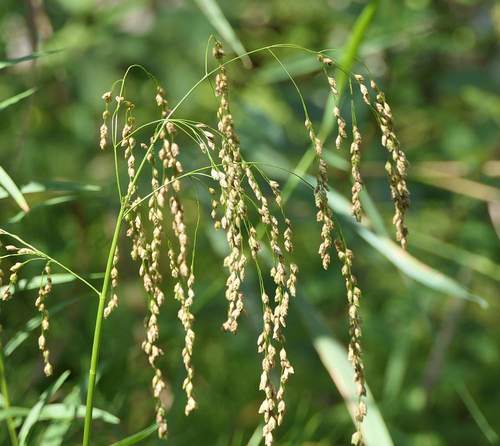
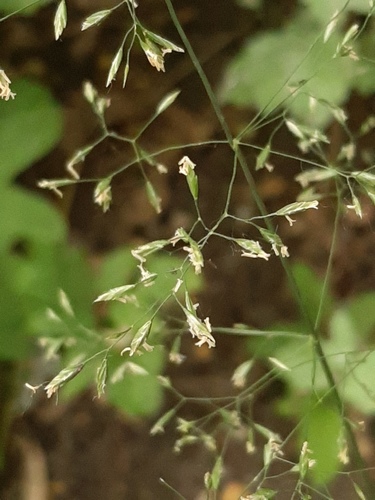
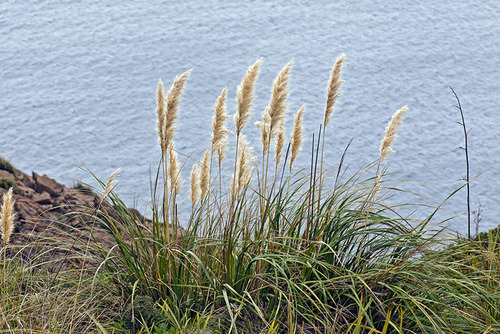
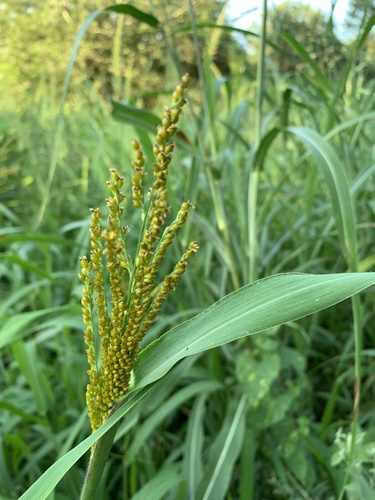
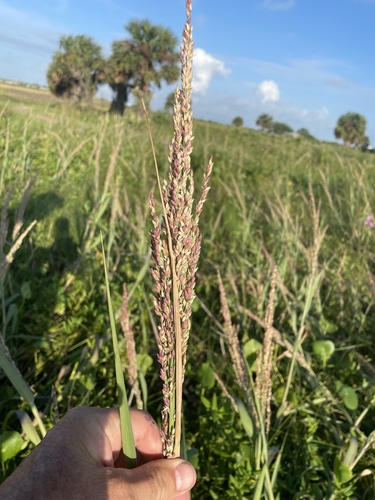
Panicum amarum Elliott is a grass species commonly called bitter panicum. It is native to North America, occurring in coastal regions along the East Coast and Gulf Coast of the United States, extending into northeastern Mexico, and also growing in The Bahamas and Cuba. This perennial grass grows from a thick rhizome. Its stems can reach up to 2.5 meters in height and 1 centimeter in thickness, and the plant can grow either erect or bent over. Its thick, firm leaves are up to half a meter long and bluish in color. The inflorescence is a narrowed panicle, reaching up to 80 centimeters long and 17 centimeters wide. While the species produces some seed, most of its reproduction is vegetative: new plants sprout from tillers and the rhizome. This grass is commonly used for dune stabilization projects to prevent erosion. Its aboveground plant parts act as a windbreak that keeps sand from being blown away, while its large root system holds sand in place. It can also be used for revegetation projects in other areas, such as mine spoils, and the variety var. amarulum is particularly valuable for these projects. The roots of this grass can grow six feet deep. The cultivar 'Atlantic' is commercially available, and the cultivar 'Dewey Blue' is also used for ornamental purposes.