About Pancratium maritimum L.
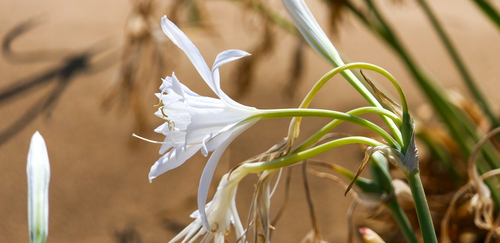
Pancratium maritimum L. is a bulbous perennial plant. It has a long bulb neck and glaucous, broadly linear evergreen leaves, though leaves often die back during hot summers. Its scape can reach up to 40 centimetres (16 in) in height. It produces 3 to 15 white flowers arranged in an umbel; individual flowers can grow up to 15 cm (6 in) long. Its corona reaches two-thirds the length of its tepals. The flowers have a pleasant, exotic, very subtle lily-like fragrance, which is only noticeable on calm, windless summer nights when the delicate scent can be perceived. It flowers from August to October. Ecologically, Pancratium maritimum is pollinated by the hawk-moth Agrius convolvuli. These hawk-moths only visit the flowers when wind speed is below 2 metres per second (6.6 ft/s). Even if artificial pollination is performed on windy days, pollination does not succeed. Pancratium maritimum cannot be fertilized by its own pollen, and requires cross-pollination to reproduce. It can be grown easily in cultivation, but requires a full sunny position and very well-drained sandy soil. It needs hot summers to trigger flowering, and often blooms infrequently in cooler climates. It is hardy to USDA zone 8, and tolerates temperatures as low as approximately −5 °C (23 °F). It can be propagated by seed or by division after flowering. Seedlings may produce their first flowers in their third or fourth year of growth.