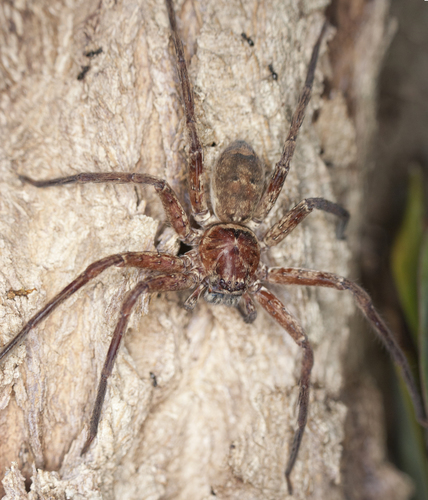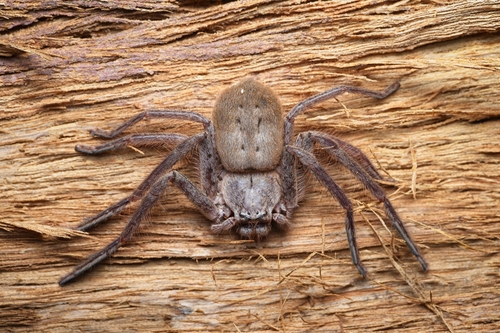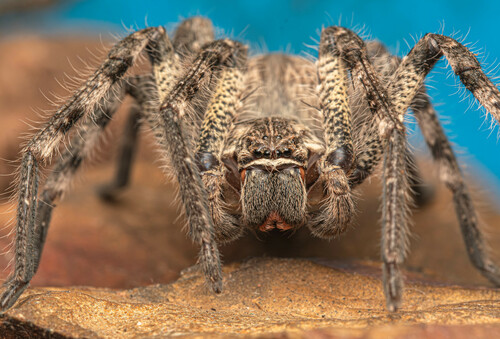
About Palystes superciliosus L.Koch, 1875
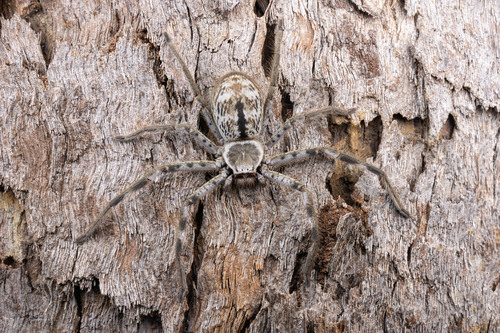
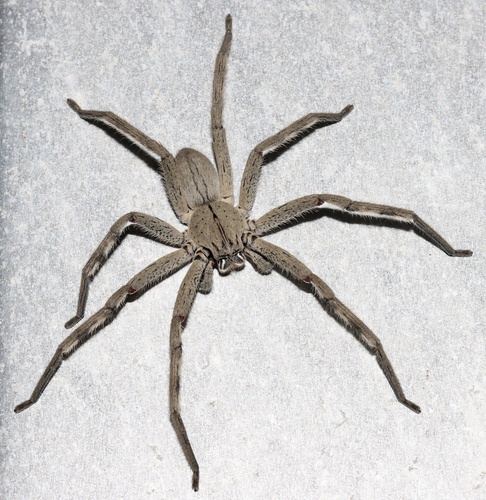
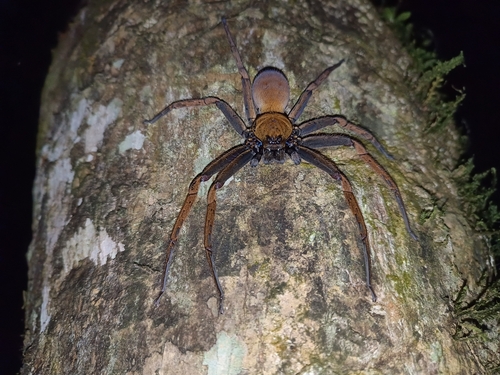
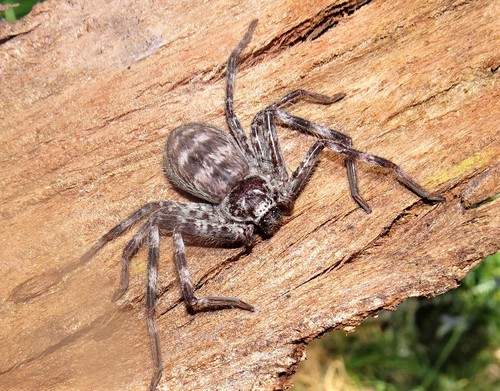
The common rain spider (Palystes superciliosus), formerly classified as P. natalius, is a huntsman spider species native to Southern Africa. It is the most common and widespread species in the genus Palystes. This species was first described by Ludwig Carl Christian Koch in 1875. Palystes superciliosus has been recorded in Namibia, Mozambique, Eswatini, and South Africa. In South Africa, it has a very wide distribution across all provinces, and occurs in more than 10 protected areas; notable locations include Kruger National Park, Ndumo Game Reserve, Polokwane Nature Reserve, De Hoop Nature Reserve, and Swartberg Nature Reserve. Its range spans altitudes from 1 to 2,785 m. Within South Africa, its distribution extends west from eastern KwaZulu-Natal province, covering the northern provinces of Mpumalanga, Limpopo, Gauteng and North West, and the southern provinces of Eastern Cape and Western Cape. Its body length ranges 15–36 mm, with a leg span reaching up to 110 mm (11 cm), and the body alone can reach 4 cm in length. Both sexes are roughly the same size. This very common species is frequently found inside houses, and usually enters homes before rainy spells. It occurs in all South African biomes except more arid ones, and has been sampled from cabbage, avocado and macadamia orchards. Its preferred habitat is scrubland and savannah woodland. Spiders of the genus Palystes are commonly called rain spiders, or lizard-eating spiders, because these spiders often enter homes before rain to prey on geckos. In Gauteng and the Western Cape, the most common prey gecko is Afrogecko porphyreus, while in eastern parts of southern Africa it is Lygodactylus capensis. Males are regularly seen from August to December, most likely searching for females. After mating in early summer, the female builds a round silk egg sac 60–100 mm in size, woven with twigs and leaves. Egg sacs are attached to vegetation, and are commonly seen from November to April. The female builds the egg sac over 3–5 hours, then aggressively guards it until spiderlings hatch inside the protective sac and chew their way out about three weeks later. Females build about three of these egg sacs over their two-year lifespan. Many gardeners are bitten by protective female Palystes superciliosus during this guarding period. When in a threat pose, the spider displays yellow and black banding on the underside of its legs; this banding combined with its large size gives it a fearsome appearance. In 1959, an experiment where a Palystes superciliosus bit an adult guinea pig on the nose resulted in the guinea pig dying within 7 minutes, which led to the belief that this spider’s venom is dangerous. However, further research on anaesthetized guinea pigs showed the original guinea pig had actually died from shock, not from the effects of the spider’s venom. In humans, a bite from this species is no more dangerous than a bee sting. It causes a burning sensation and swelling that lasts for a few days, and recovery is spontaneous and complete.