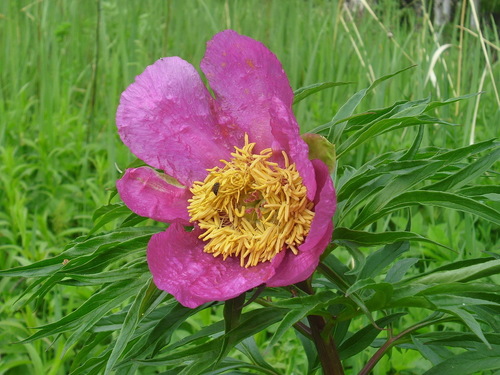
About Paeonia anomala L.
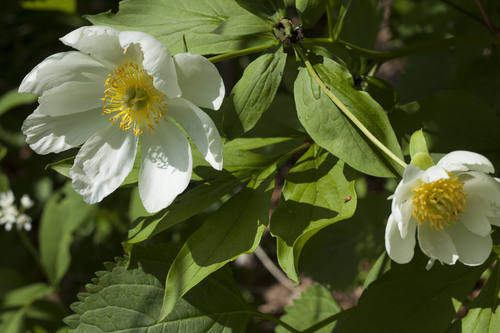
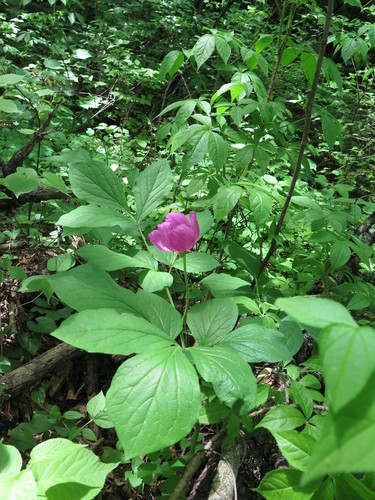
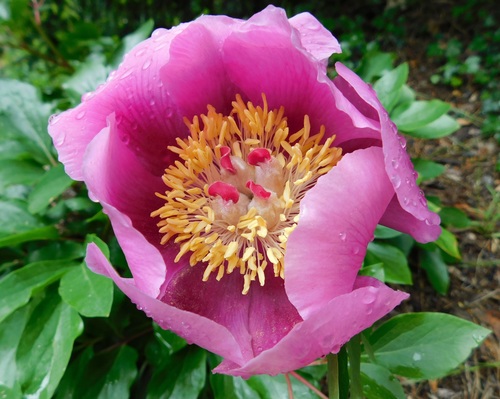
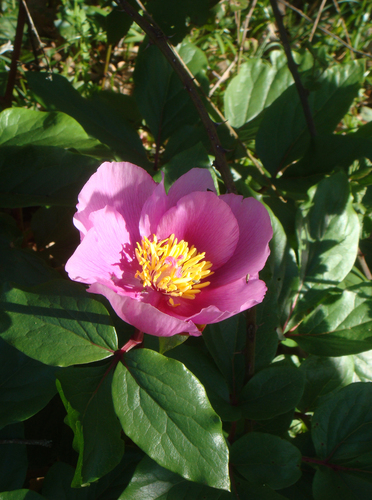
Paeonia anomala L. is a herbaceous, non-woody peony species that grows ½ to 1 meter tall. It has an irregular carrot-shaped taproot that reaches over ½ meter in length and 2 cm in thickness, tapering gradually toward the bottom with thin side roots. As a diploid peony, it has 10 chromosomes, with 2n=10. Paeonia anomala is naturally distributed from the Kola Peninsula across Russia to the Altai Republic and Lake Baikal, as well as in northeastern Kazakhstan, northern Mongolia, and northwestern Xinjiang, China. It has also become naturalized in Finland. This species grows in relatively moist habitats including coniferous and deciduous forests, valleys, and meadows. At the southern edge of its range, it grows at altitudes between 1000 and 2500 meters, while further north it can be found down to sea level. Its northernmost population grows in the Taz River valley, in a forest of stunted, dwarfed trees including Larix sibirica, Betula pubescens, Alnus viridis subsp. fruticosa, and Sorbus aucuparia subsp. sibirica, alongside shrubs such as Rosa majalis, Lonicera pallasii, and Ribes spicatum subsp. hispidulum, and the grass Calamagrostis canescens. Paeonia anomala is self-fertile, and mammals including deer and rabbits do not eat it. Paeonia anomala was historically grown only in botanical gardens, but it is now available to home gardeners as an ornamental plant. It is easy to cultivate, prefers neutral or slightly alkaline, deep, rich soil, and can tolerate lime. It grows equally well in full sun or dappled shade. Plants cannot tolerate waterlogged or extremely dry soil; on sandy soils, they typically produce more leaves and fewer flowers. As a Siberian species, it survives temperatures down to at least −25 °C. It has high ornamental value, and garden plants can live for at least 50 years. This peony inhibits the growth of adjacent plants, particularly legumes. Like all peonies, it is sensitive to root disturbance and requires time to recover after replanting or division. In the late 19th century, Khakas people in northwestern Siberia ate the raw roots of Paeonia anomala and added crumbled roots to soup. In traditional Mongolian medicine, the fruits and roots of this species are used to treat lower abdominal pain, indigestion, kidney diseases, nocturnal enuresis, bleeding, blood clotting, exhaustion, and respiratory diseases. Fruit extract from Paeonia anomala protects against oxidative stress through free radical scavenging, increasing cellular glutathione concentrations, and inhibiting DNA damage. Compounds including ellagic acid, methyl gallate, ethyl gallate, fischeroside B, and quercetin derivatives are responsible for this protective effect.