About Pachyrhamma edwardsii (Scudder, 1869)
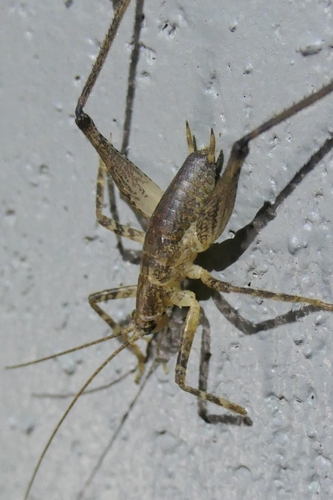
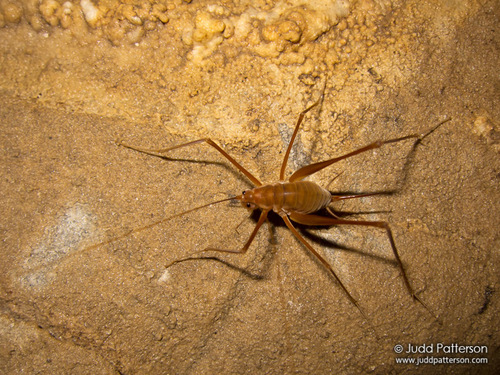
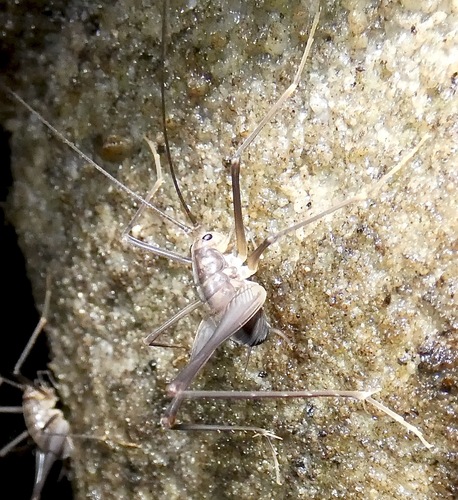
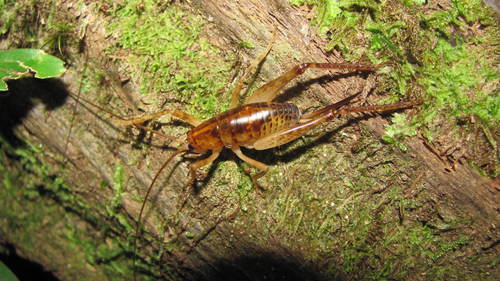
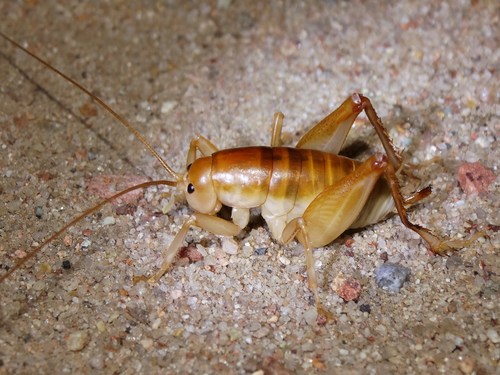
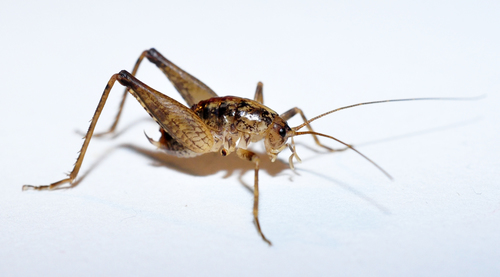
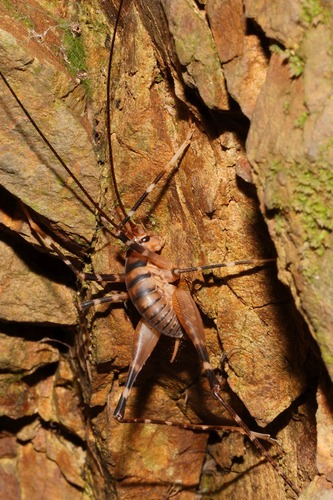
Pachyrhamma edwardsii, first described by Scudder in 1869, has small bodies reaching a maximum length of around 41 mm, with an average length of 35 mm. This species has very long hind legs, with a leg to body length ratio of 3.17:1; antennae that measure 4.5 to 5 times the body length; and an ovipositor that measures 7 to 8 times the body length. Its head is oriented vertically, and it has small mandibles. Antennae are sexually dimorphic: males have longer, stouter antennae than females. The body is sparsely covered in golden setae. Adult individuals are brown, with distinct dark or nearly black bands across the posterior margins of their abdominal segments. Antennae are medium brown, while the ovipositor is deep reddish-brown. Pachyrhamma edwardsii is widespread in central New Zealand, ranging from Waikato in the North Island to Nelson in the South Island. It is a common resident of human-made rock tunnels and limestone caves, and is also found in forests and stony stream beds. It additionally inhabits the offshore islands of the Marlborough Sounds, as well as Mana and Kapiti Islands near Wellington. This species can be found at night in forests and near cave entrances. It belongs to a moisture-loving group of insects, and prefers cool temperatures and high humidity. Pachyrhamma edwardsii is flightless and nocturnal, and uses its long antennae to navigate in dark environments. During the day, it stays motionless on cave walls, inside hollow logs, or under stones, and is only active at night. This cave wētā feeds on a wide range of plants, fungi, and lichens, and also scavenges animal material. It is parasitized by gordian worms and intracellular bacteria. Its long slender legs are used for walking, climbing trees to search for food, and jumping away to escape danger. While individuals aggregate in caves, they have no social structure and display solitary habits. A colony of this species is made up of mature males and females, plus dozens of juveniles. The small mouth parts of this cave wētā are not used for defense. Its bite is harmless, and individuals very seldom attempt to bite. The hind legs bear numerous spines, but these are too small to produce a painful scratch. Its recorded defense mechanism is the secretion of brown or white fluid from the mouth or anus. Pachyrhamma edwardsii individuals are frequently observed grooming themselves. They use a complex, lengthy process of nibbling along their legs, body, and antennae. This grooming process removes dust particles and keeps the antennae and leg setae sensitive to environmental changes. Cannibalism is quite common in this species during mating season, when individuals of the opposite sex attack each other. Cannibalism may also occur immediately after moulting (ecdysis). During copulation, the female is positioned superior to the male, who positions himself underneath her. The female uses her long ovipositor to lay eggs into soil and cave walls. The eggs are likely parasitized by endemic wasps of the genus Archaeoteleia. After copulation, females groom their ovipositor and antennae. The gestation period of the eggs is unknown. Just after hatching, the first instar nymph of Pachyrhamma edwardsii is the size of a grain of rice. First instar nymphs are coloured light brown, orange, and beige, and their long slender legs already show the beginning of adult colouration.