About Pachydiplax longipennis (Burmeister, 1839)
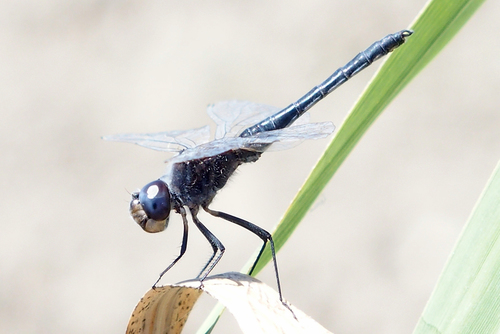
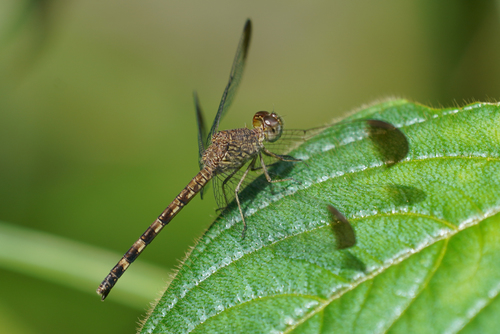
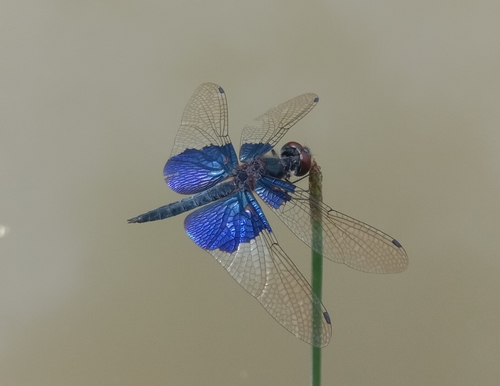
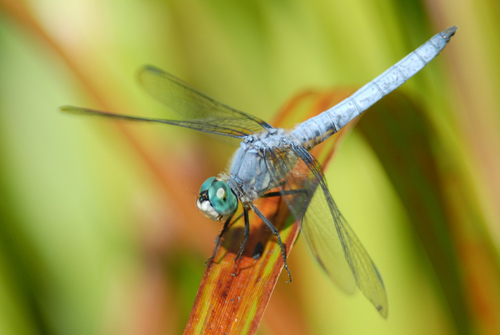
The blue dasher, Pachydiplax longipennis, is an insect belonging to the skimmer dragonfly family, and it is the only species classified in the genus Pachydiplax. It has a wide distribution across most of North America and extends into the Bahamas. While its species name longipennis translates to "long wings", the wings of this dragonfly are not noticeably longer than the wings of its close relatives. Females of the species have a short abdomen, which gives their wings the visual appearance of being longer by comparison. Adult blue dashers reach a total length between 25 and 43 millimetres, or 0.98 to 1.69 inches. Males are easily identified by their vibrant blue bodies, yellow-striped thoraxes, and metallic green eyes. Females are less brightly colored than males, a form of sexual dimorphism. Females share the males' yellow-striped thorax, but their abdomens have distinct brown and yellow striping that distinguishes them from males, and they have contrasting red eyes. Both sexes develop a frosted pale coloration as they age. Pachydiplax longipennis displays aggressive behavior when seeking mates and when foraging, and the species faces no current conservation threats. This is a commonly encountered dragonfly species throughout the United States, where it occupies many different habitat types that all include a permanent body of water such as a stream, river, or lake. It has recently been observed in the lower regions of Canada, specifically around Ottawa, and researchers suggest climate change is allowing this species to expand its range northward. Blue dashers inhabit areas close to still, calm bodies of water including ponds, marshes, slow-moving waterways, and ditches. They prefer warm habitats, most often located at low elevations. Adult blue dashers roost in trees overnight.