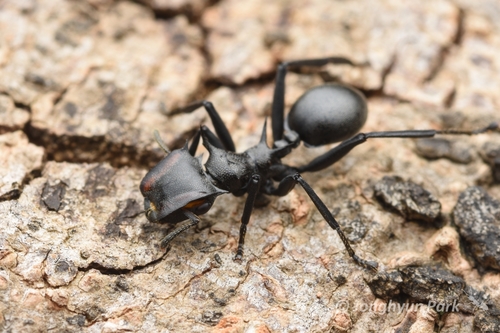
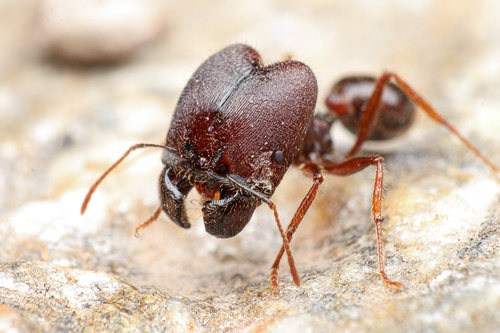
About Pachycondyla chinensis (Emery, 1895)
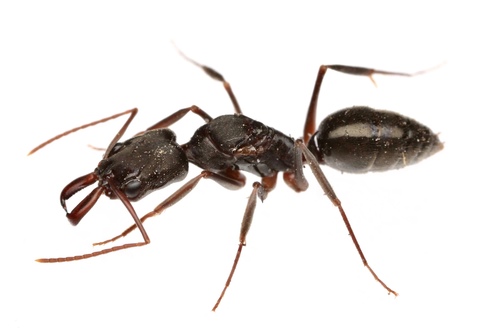
Brachyponera chinensis, commonly called the Asian needle ant, is a ponerine ant native to Japan and other areas of Asia. It was previously known scientifically as Pachycondyla chinensis, a name that was widely used in scientific publications until 2014. The Asian needle ant was introduced to the United States in the 1930s, where it is classified as an adventive species and is considered possibly invasive. In the U.S., Asian needle ants have been observed competing for territory with Argentine ants (Linepithema humile). Documented records show that B. chinensis has invaded North America mainly along the U.S. East Coast, ranging from Florida to Massachusetts. Its range extends west into Kentucky, Tennessee, and Arkansas. Confirmed sightings and established outlier populations of the species also exist in Washington and Wisconsin. This invasive species is a growing concern because it has negative ecological impacts on biodiversity and poses medical risks to human health, as its sting can cause anaphylaxis. Asian needle ants thrive in moist, shaded environments. In their native range, they are commonly found in agricultural areas including rice paddy dykes. They frequently build ground nests in natural forests, preferring to nest under stones, logs, or debris. B. chinensis often locates its nests near termite colonies, since termites are a consistent food source for the species. The ant has also been found living in urban areas, in locations such as backyards and sidewalks.