About Ozothamnus secundiflorus (N.A.Wakef.) C.Jeffrey
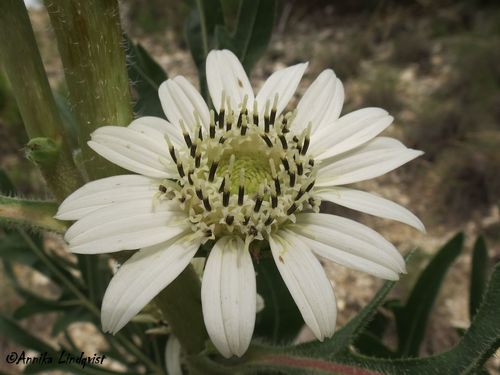
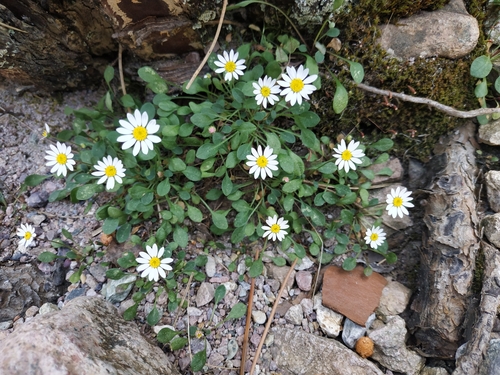
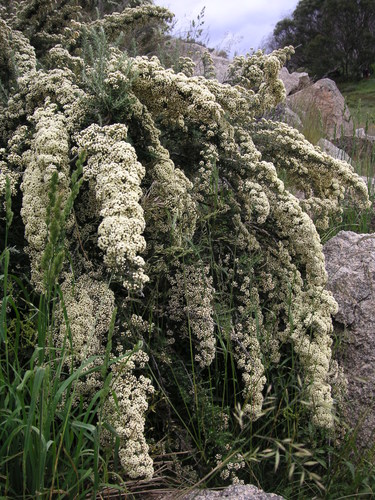
Ozothamnus secundiflorus, commonly known as the cascade everlasting, is an aromatic shrub species that is endemic to Australia. It reaches a height between 0.5 and 2 metres. Its leaves measure 6 to 10 mm long and 1.5 to 4 mm wide. The upper leaf surface is dark green and covered in grey hairs, while the lower leaf surface is white and tomentose. In its native range, dense clusters of white flower heads form along one side of the stem between December and February each year.
This species was first formally described under the name Helichrysum secundiflorum by N.A. Wakefield in the journal The Victorian Naturalist in 1951. The description was based on plant material collected from Mount Cobberas by botanist Ferdinand von Mueller in 1854. In 1976, C.Jeffrey transferred the species to the genus Ozothamnus, publishing the new combination in the work Trees & Shrubs Hardy in the British Isles. The species grows in open woodland in subalpine areas and sheltered alpine areas of New South Wales and Victoria. It is commonly found growing among rocks in association with Eucalyptus pauciflora.