About Ozoroa paniculosa (Sond.) R.Fern. & A.Fern.
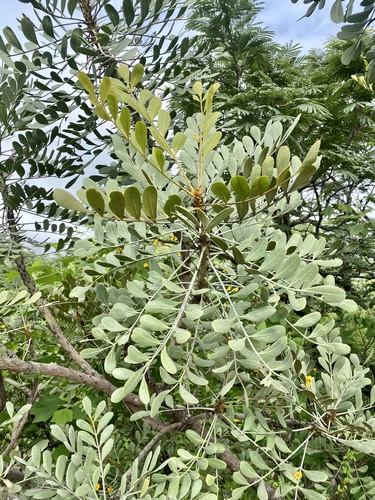
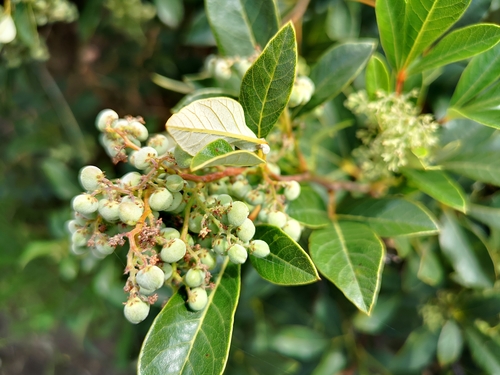
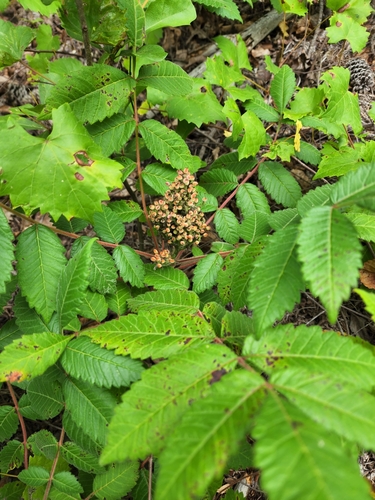
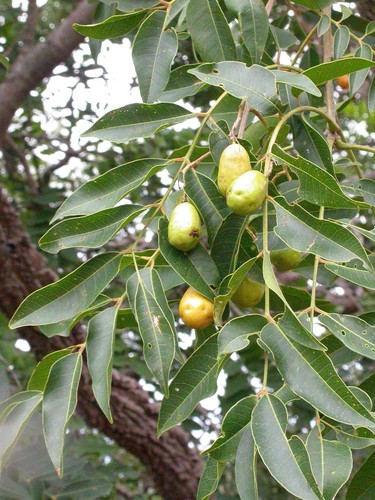
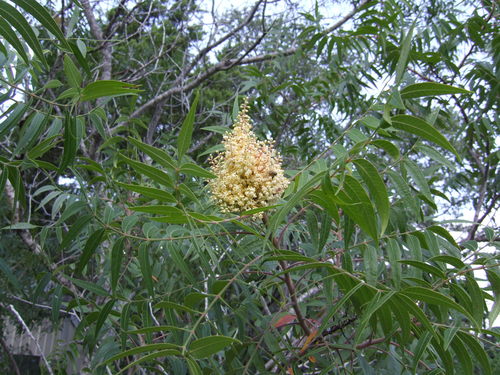
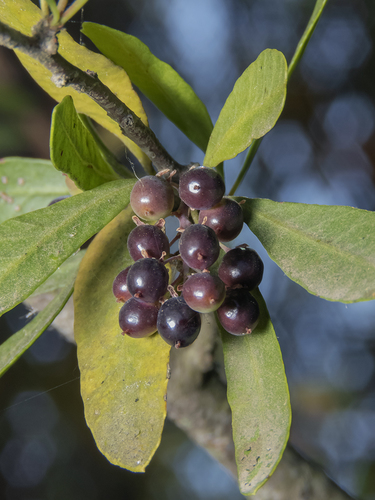
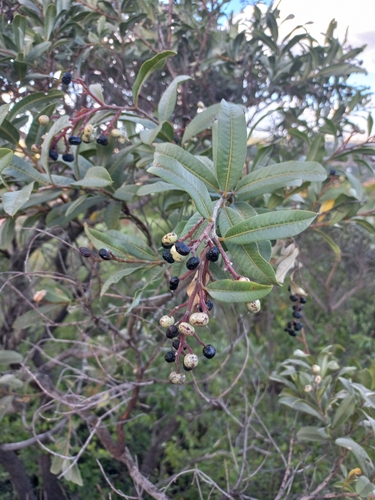
Ozoroa paniculosa (Sond.) R.Fern. & A.Fern., previously classified as Heeria paniculosa, is commonly known as the bushveld ozoroa or common resin tree. This small tree is a member of the mango family, Anacardiaceae. It is native to southern Africa, where it grows in Zimbabwe, South Africa, Mozambique, Botswana, and Namibia. At high elevations, it reaches a height of about 6 metres, but in warmer, low-lying areas it can grow as tall as 15 metres. The Ozoroa genus currently contains around 28 species, and ranges from southern Africa to the Arabian Peninsula. This species is a deciduous dioecious tree with silvery-green, alternate or whorled, simple, discolorous leaves. Its leaves have distinctive parallel secondary venation, and have a silky-tomentose texture on their under-surface. Drooping panicles of fragrant creamy-white flowers grow at the ends of new shoots. Its fruits are initially light green, and develop on salmon-pink peduncles. As they mature, the fruits become speckled with reddish-brown, and later turn completely black and wrinkled. Broken shoots of this tree may exude a milky latex. Its bark is granular and ranges from dark grey to black in color. This species is prone to fire damage, and after fire damage it becomes vulnerable to insect pests such as borers. Developing seeds of Ozoroa paniculosa are parasitized by insects.