About Oxyura maccoa (Eyton, 1838)
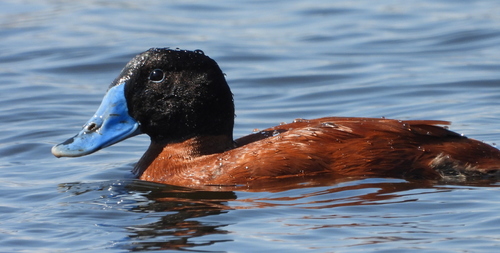
Maccoa ducks (Oxyura maccoa) belong to the stiff-tailed duck group, and are often seen wading in water with their tail feathers held cocked upwards. As diving ducks, their bodies are specialized for agile swimming underwater, so they have lost the physical traits that would let them move well on land. Their legs are positioned further back on their bodies, which makes walking on land awkward for them. Outside of the breeding season, Maccoa ducks usually occupy nutrient-rich inland waters that range from fresh to brackish. These habitats include lakes, ponds, salty flooded water pans, dams, river mouths, and sewage ponds, which all provide enough space for the ducks to land, take off, and dive underwater to feed. When breeding, Maccoa ducks use generally similar habitats, with one key addition: breeding sites require both open freshwater and adjacent emerging vegetation. They especially prefer Typha species for breeding, and typically build their nests hidden in clumps of these reeds. The Maccoa duck is found across southern and eastern African countries. It is a sedentary species, meaning it does not migrate for winter or breeding, only moving short distances to find new wetlands for feeding and nesting. Main populations across Africa are widely spaced with large gaps between them, which is likely caused by a lack of suitable wetland habitat due to climatic variation across the continent. In 2012, the global population was estimated to be around 11,000 individuals, with approximately 75% of these living in southern Africa at that time; South Africa alone remains home to half of the global Maccoa duck population. While many bird species are harmed by human disturbance and land-use change, Maccoa ducks have benefited from human water management and infrastructure. Large groups of this species have been recorded living behind dams in Namibia, including the Friedenau Dam, Borodino Dam, and the Walvis Bay Sewage Works. These large structures provide deep freshwater habitat for these diving ducks, and may actually benefit the conservation of this species. This species typically mates and lays eggs between January and May, during which time it occupies small, defended freshwater habitats with emerging vegetation, as noted earlier. Male Maccoa ducks are polygynous, meaning a single male mates with multiple females, and they aggressively defend their breeding territories. Males do not help with nest building or parental care. After mating, females stay in the male's territory and either build a new nest from sedges, reeds, and down, or sometimes reuse existing nests built by coots and grebes. Clutches usually contain 5 or 6 eggs, but can reach up to 12 when females lay their eggs in another female's nest (a behavior called egg dumping). In addition to egg dumping, female Maccoas have been observed abandoning their young before and during incubation. The incubation period typically lasts 25 to 27 days, but the fledging period is not well documented. Newly hatched chicks have dark legs, feet, and bills, a white face, and are covered in grey-brown down. Interestingly, the breeding plumage of male Maccoa ducks is affected by their social rank. A 1985 study of captive Maccoa ducks found that submissive males, who were harassed by more dominant males and had lower social ranking, did not develop the distinctive bright, flashy breeding plumage that higher-ranked males get.