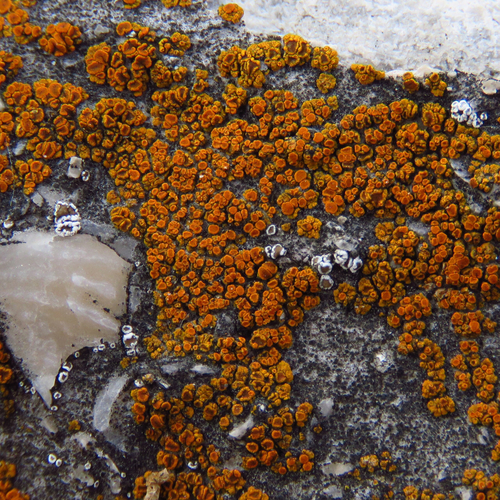
About Oxneria fallax (Arnold) S.Y.Kondr. & Kärnefelt
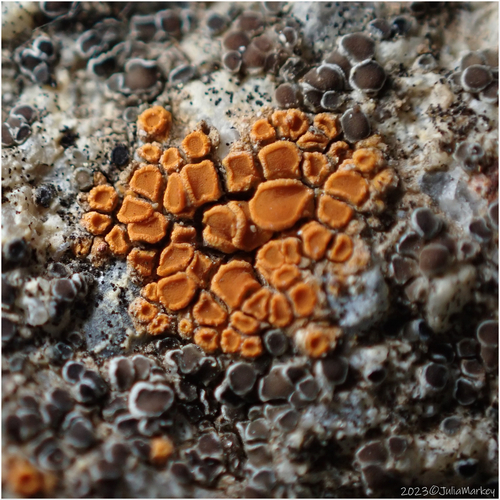
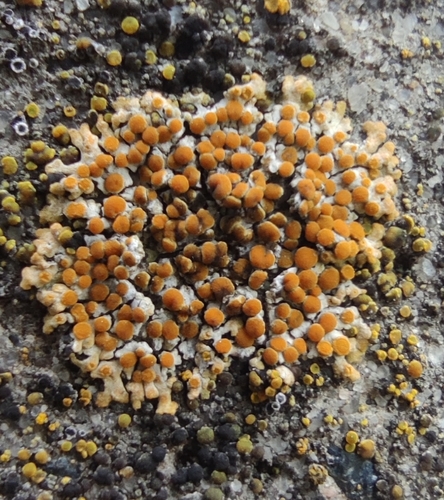
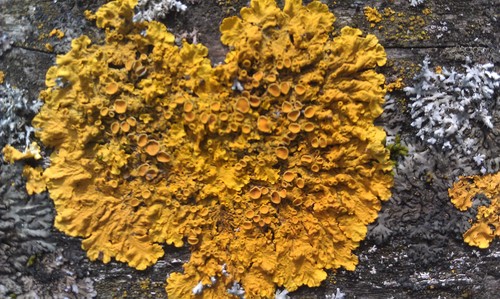
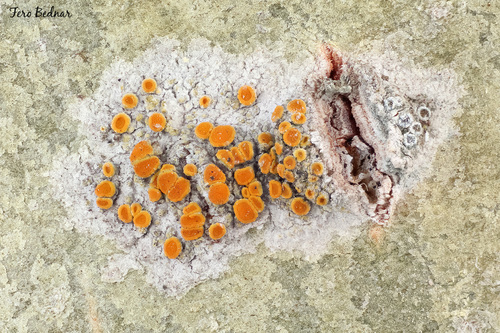
Oxneria fallax, commonly called the hooded sunburst lichen, is a small foliose lichen that ranges in color from yellow-orange to red-orange. It grows primarily on bark, and rarely grows on rock or bone. It is found across the world, with the exception of very dry regions. Its non-fruiting body, the thallus, grows in rosettes that reach up to 3 centimeters in diameter. Rosettes sometimes grow together and coalesce. The lichen's lobes may appear divided at their tips. It is sometimes tightly pressed against its growing surface (adnate), and sometimes is not. Its fruiting bodies, called apothecia, are lecanorine: this means they are disc-shaped, with a tissue rim around the disc made of the same kind of tissue as the thallus. The tips of the lobes form hood-shaped soralia that produce powdery, greenish-yellow soredia. This lichen prefers growing on elm or oak bark, but can also grow on rocks, bone, and other types of wood. In Norway, it has been recorded growing on the bark of multiple sun-exposed broadleaved tree genera, including Acer, Betula, Fagus, Fraxinus, Populus, Tilia, and Ulmus. Lichen spot tests on the thallus surface give the following results: K+ (purple), C−, KC−, and P−.