About Ouret lanata (L.) Kuntze
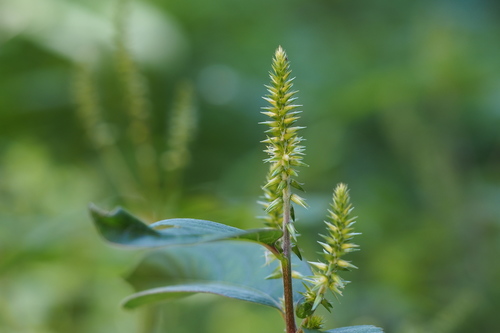
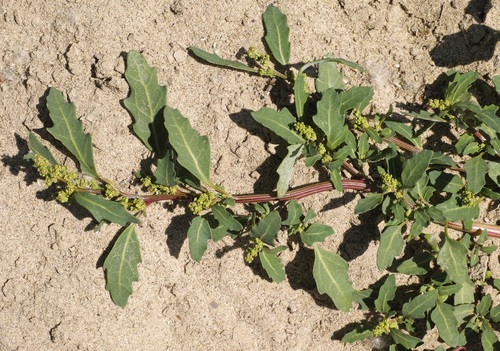
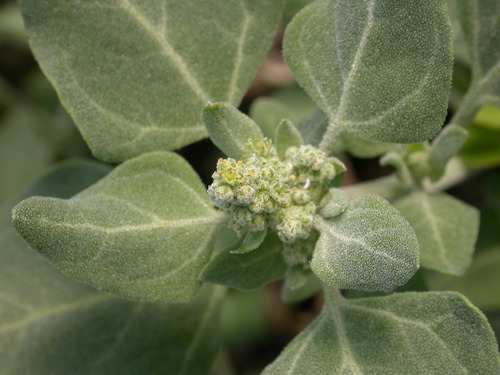
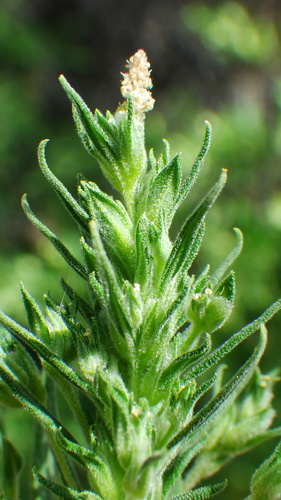
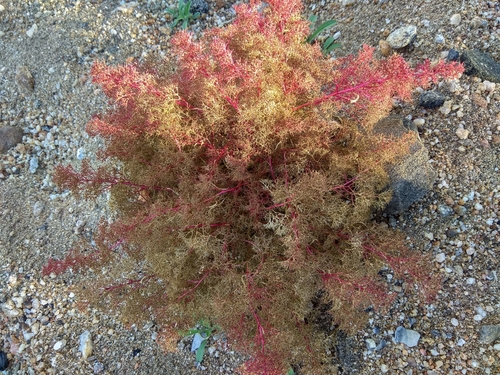
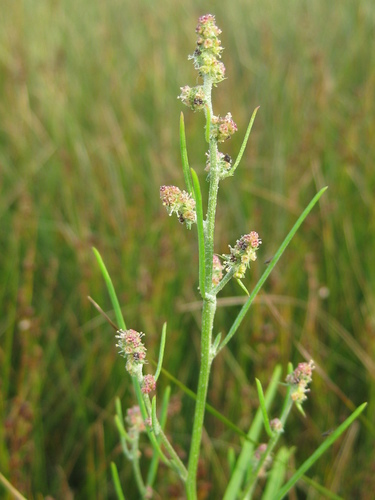
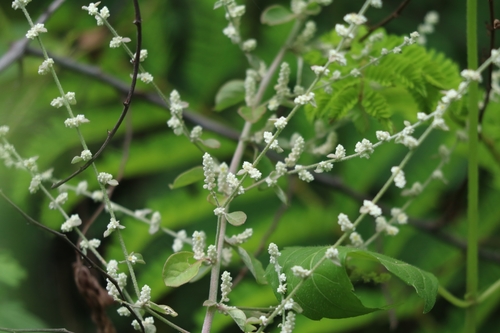
Ouret lanata (L.) Kuntze, commonly known as mountain knotgrass, is an annual plant with a branching, somewhat woody root system. Its stems are mostly straggling, sprawling, and spread widely, sometimes reaching up to 1.8 m (6 feet) in length. The alternate, stalkless leaves are oval, measuring 13 to 38 mm (0.5 to 1.5 inches) long. Leaves grow from two-lobed whitish papery stipules that have red bases. Tiny clusters of two or three flowers grow in the leaf axils; these flowers are about 2.5 mm (0.1 inch) long, and can be pink, green or dull white. The flowers are normally self-pollinated, and flowering occurs from May to October.
This species is native to tropical Africa, Madagascar, Egypt, Saudi Arabia, Yemen, the Indian subcontinent, Vietnam, Peninsular Malaysia, Sumatra, Java, the Philippines, and New Guinea. Ouret lanata prefers damper sites than Aerva javanica, and can be found growing in open forests on mountain slopes, on waste and disturbed ground, abandoned cultivation, and coastal scrub, at elevations ranging from sea level up to 900 m (3,000 ft). It is a common weed in arable fields and bare patches of ground.
Ouret lanata is used as food for both people and animals. The entire plant, especially the leaves, is edible: leaves are added to soup, or eaten as spinach or a vegetable. The plant provides grazing for livestock, wild game, and chickens.
It has a number of traditional cultural and medicinal uses. It is used as a traditional medicine for snakebites. As part of traditional practice during the Sankranti festival, a snippet of the plant is placed in the center of crude cow dung balls called "Gobbemmalu". It is also used as a talisman to ward off evil spirits, as a good-luck charm for hunters, and as a talisman to support the well-being of widows. In Indian traditional medicine, juice made from crushed Ouret lanata root is used to treat jaundice.