About Ourapteryx sambucaria (Linnaeus, 1758)
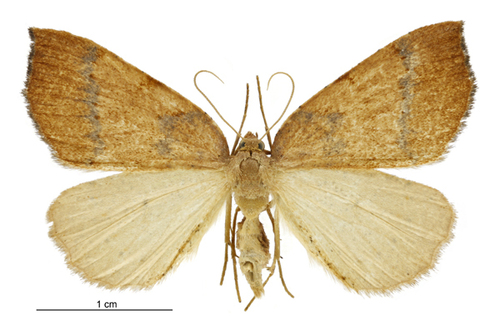
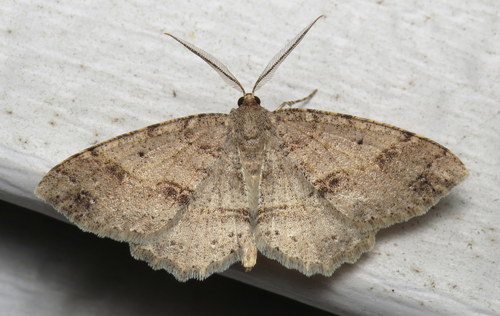
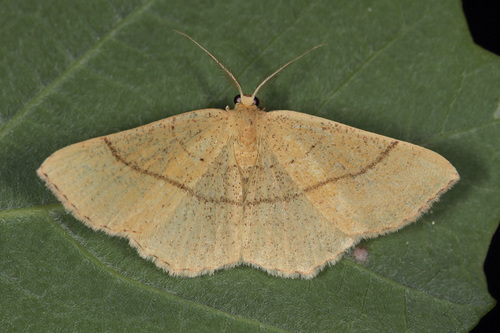
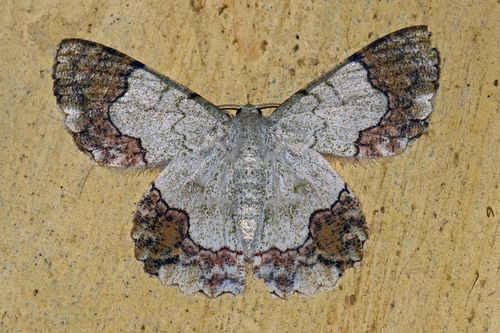
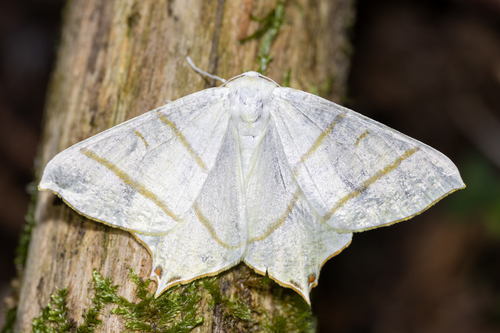
This is a large, impressively butterfly-like moth with a wingspan of 50–62 mm. All parts of the adult moth are colored bright white to pale yellow, marked with faint buffish bands. The species gets its common name from pointed projections along the outer edge of the hindwing, which have brownish spots at their base. It flies at night during June and July, is attracted to light, and sometimes appears in large numbers; this stated flight season refers specifically to the British Isles, and may differ in other parts of the species' range. Prout has provided an account of the variations seen in this species. The egg is orange, with approximately 16 longitudinal keels, and small transverse lineations between these keels. The larva is grey-brown, with coloring arranged in a series of barely noticeable longitudinal lines. The brown larva resembles a twig, and feeds on a variety of trees and shrubs, including elder, hawthorn, honeysuckle, and ivy. This species overwinters in its larval stage.