About Otus sunia (Hodgson, 1836)
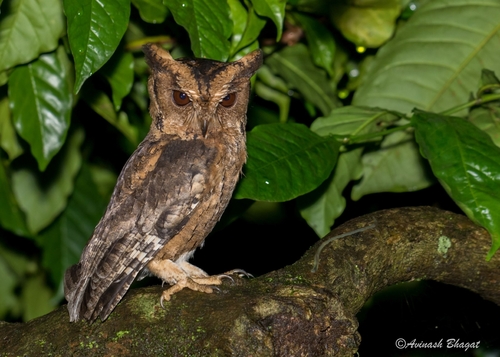
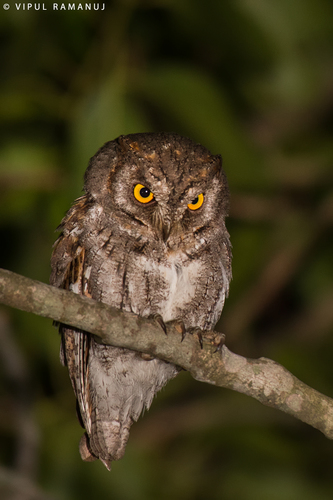
The oriental scops owl (scientific name: Otus sunia (Hodgson, 1836)) is a small owl species with variable plumage, yellow eyes, and ear-tufts that are not always held erect. It can be told apart from the collared scops owl by its whitish scapular stripe, clearly marked underparts, and the absence of a pale collar. This species has two main colour morphs, grey and rufous, and intermediate forms also exist. Males and females look similar in appearance. When disturbed, individual oriental scops owls may freeze with their eyes half-closed. This owl produces a repeated liquid call that sounds like "tuk tok torok", and adult calls are higher-pitched than the calls of juveniles. The oriental scops owl has an extremely large distribution across eastern and southern Asia, and lives in dry deciduous forests ranging from Russia to Thailand. Between February and April, this owl nests in tree holes, particularly holes in Mahua trees.