About Otiorhynchus meridionalis Gyllenhal, 1834
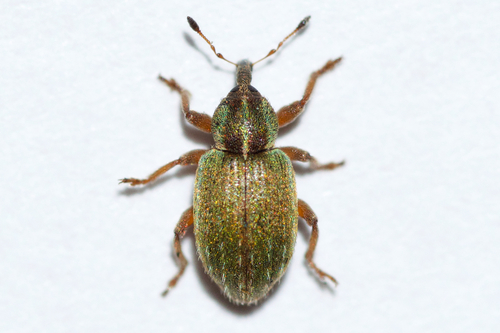
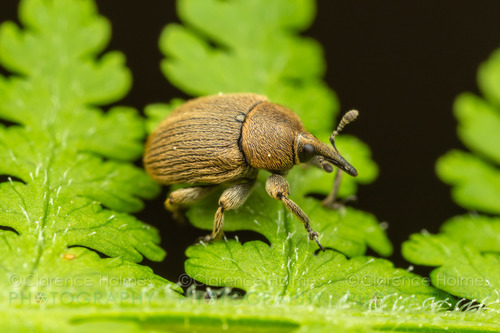
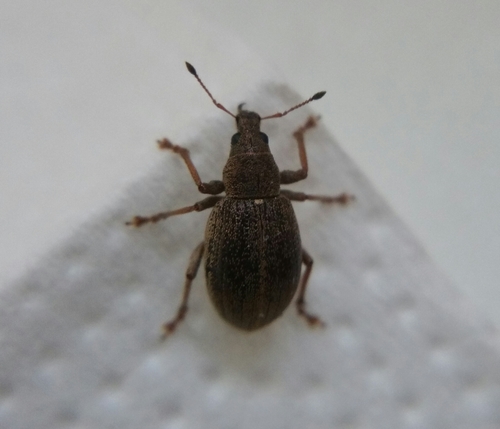
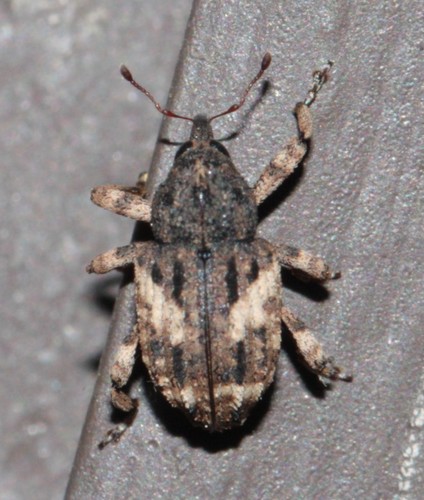
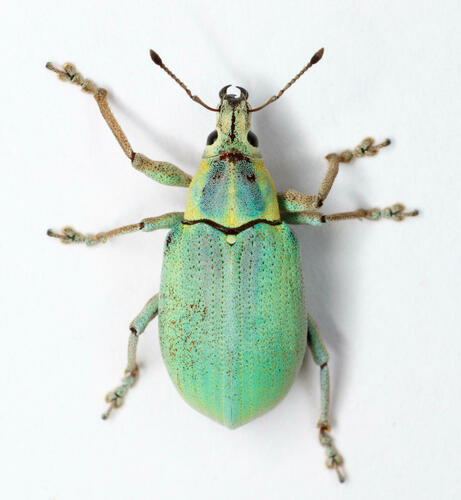
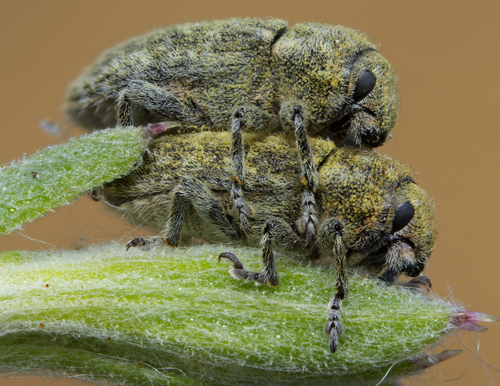
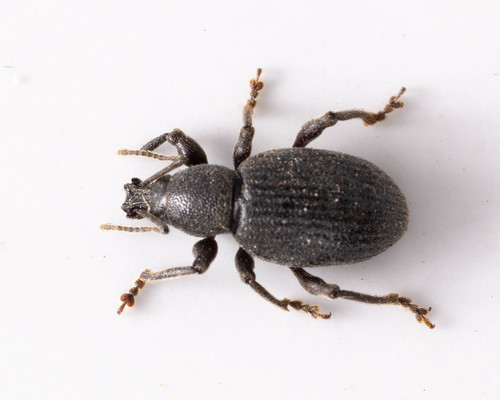
Otiorhynchus meridionalis, commonly called the lilac root weevil, is a species of broad-nosed weevil that belongs to the family Curculionidae. It occurs in North America. Lilac root weevils are shiny brownish-black beetles that measure around 0.25 inches (6 mm) long. They have a long snout, also called a rostrum, and geniculate, or elbowed, antennae. These weevils are common landscape pests, and they feed on lilac, euonymous, and peonies. Their larvae feed on plant roots, while adult weevils feed on leaves, eating only the leaf edges to form numerous U-shaped notches. They are commonly found on North American lilac plants, but they rarely cause permanent lasting damage to these plants. Adult lilac root weevils are nocturnal. Like other related root weevils including O. ovatus, O. rugostriatus, and O. sulcatus, lilac root weevils often wander into households during hot summer months to search for shade and moisture. Although they are completely harmless to humans, pets, and home furnishings, their presence is considered a nuisance. Treatment with pyrethroid-based insecticides is only recommended for cases of severe infestation; occasional individual weevils are best left tolerated or removed through mechanical means.