About Ostrinia nubilalis Hübner, 1796
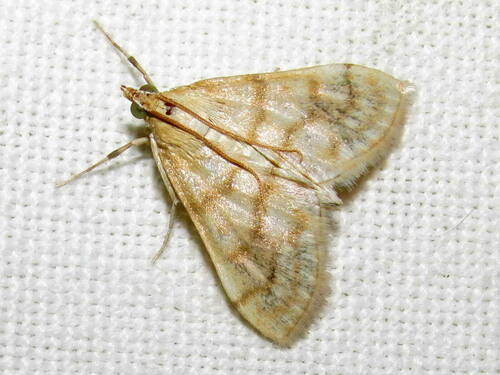
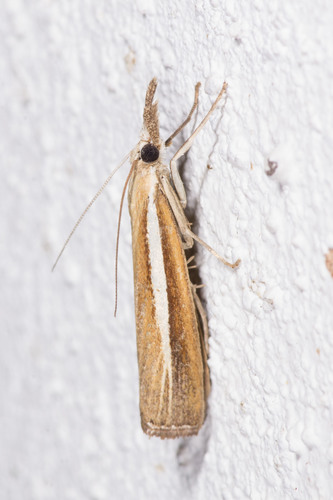
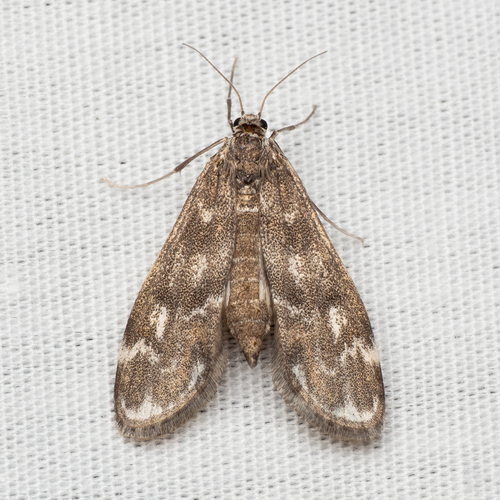
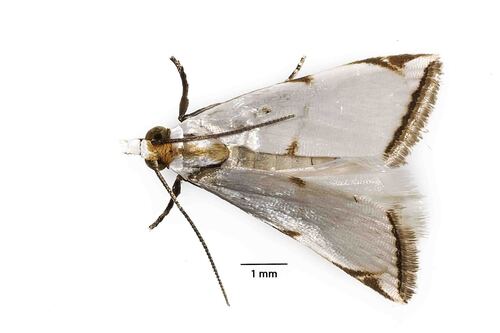
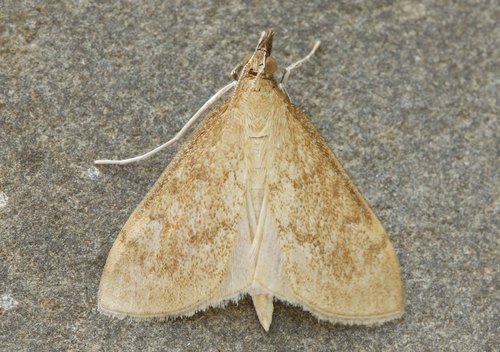
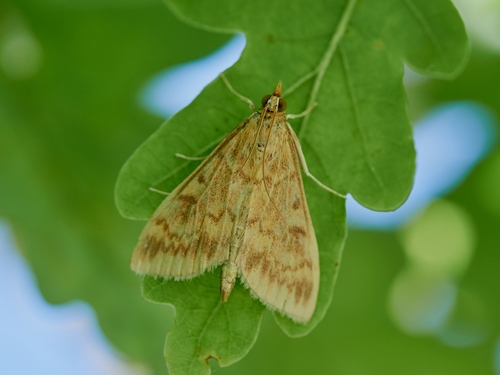
The European corn borer, scientifically named Ostrinia nubilalis Hübner, 1796, is also commonly called the European corn worm or European high-flyer. It is a moth species belonging to the family Crambidae, and it acts as a pest of grain crops, especially maize (Zea mays). This insect is native to Europe, where it originally infested varieties of millet including broom corn. It was first reported in North America in 1917 in Massachusetts, though it was likely introduced from Europe several years before that. Since its initial discovery in the Americas, it has spread into Canada and westward across the United States to the Rocky Mountains. Adult European corn borers are roughly 25 millimetres (0.98 in) in body length, with a wingspan ranging from 26 to 30 millimetres (1.0–1.2 in). Females are light yellowish brown with dark, irregular, wavy bands crossing their wings; males are slightly smaller and darker overall. Caterpillars of this species damage corn by chewing tunnels through many parts of the plant, which causes reduced agricultural yield. The European corn borer is native to Europe and was introduced to North America in the early 20th century. It infests corn crops in France, Spain, Italy, and Poland. In North America, it occurs in eastern Canada and every U.S. state located east of the Rocky Mountains. The European corn borer goes through four distinct developmental stages: egg, larva, pupa, and adult. It is called a borer during its larval stage, and a moth in its adult stage. Adult moths lay their eggs on corn plants, and larvae hatch from these eggs. Larval development includes five instars, or sub-stages, after which the insect enters a diapause (hibernation) period as a pupa. During the pupal stage, borers complete metamorphosis inside a dormant chrysalis. After this period of development, an adult moth emerges from the pupa. The duration of the pupal stage is shaped by environmental factors including temperature, daily light hours, and larval nutrition, as well as genetics. Bivoltine populations of European corn borers complete the pupal stage twice a year: first from April to June, and again in July and August. The European corn borer remains in its larval stage throughout the winter. Air temperatures above 50 degrees Fahrenheit (10 °C) trigger the start of other developmental stages. North American corn crops grow during these warmer months, and provide a source of food for the borers.