About Osteomeles anthyllidifolia (Sm.) Lindl.
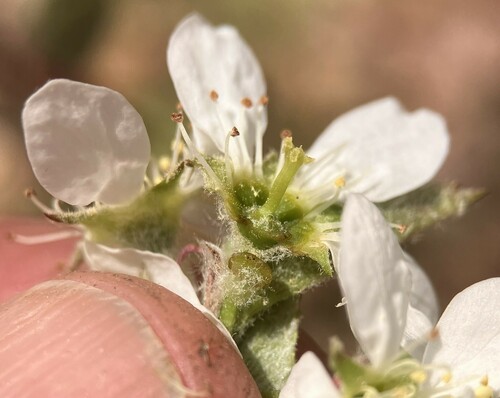
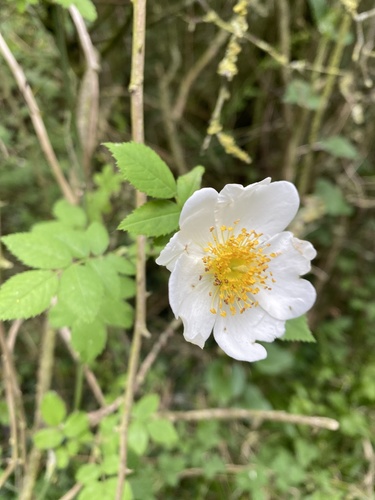
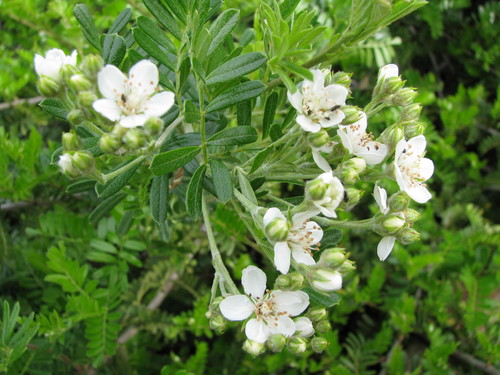
Osteomeles anthyllidifolia grows as either an erect shrub up to 3 metres (9.8 ft) tall, or a spreading shrub. Its compound leaves are alternately arranged on branches, and are divided into 15 to 25 small, oblong leaflets. Each leaflet measures 1.5 centimetres (0.59 in) long and 0.7 centimetres (0.28 in) wide. Small white flowers with five petals 7–11 millimetres (0.28–0.43 in) long grow in clusters of three to six at the ends of branches. When ripe, the fruit of this plant is white, 1.0 centimetre (0.39 in) in diameter, and contains yellow seeds that measure 1.5 millimetres (0.059 in) in diameter. Osteomeles anthyllidifolia occurs in dry to mesic forests, shrublands, coastal areas, and lava plains, at elevations ranging from 2 to 2,320 metres (6.6–7,611.5 ft). It is a ruderal species that can compete effectively with other plants on disturbed sites. For medicinal use, the leaves and root bark are applied to deep cuts, while the seeds and buds are used as a children's laxative. Non-medicinally, the strong wood of mature Osteomeles anthyllidifolia was used by Native Hawaiians to create a wide range of items: ʻō (harpoons) for catching heʻe (octopuses), ihe paheʻe (javelins), ihe (spears), ʻōʻō (digging sticks), round hohoa kapa beaters, square ʻiʻe kūkū kapa beaters, ʻūkēkē (musical bows), and ʻauamo (carrying sticks). Young, flexible branches of this species were shaped into hoops for ʻaʻei, 25-foot (7.6 m) bag nets used with kalo (taro) bait to catch schools of ʻōpelu (Decapterus macarellus). The fruit is edible, and was also used to produce a lavender dye.