About Orgyia antiqua (Linnaeus, 1758)
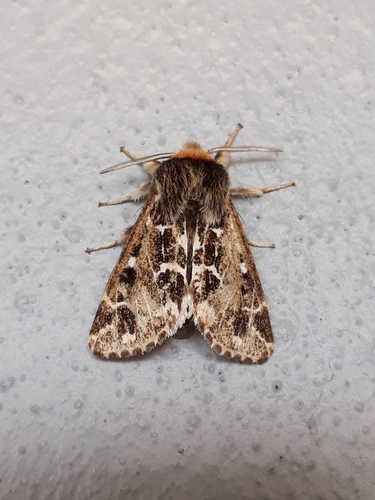
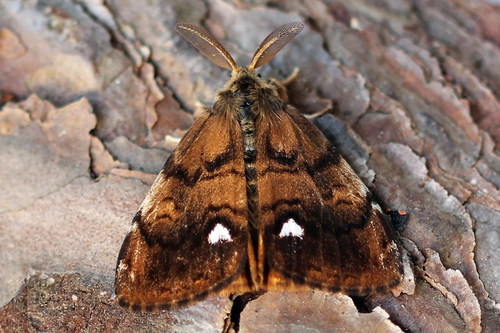
This moth species shows striking sexual dimorphism between adult males and females. Males typically have orange to red-brown wings, in shades of ochreous red and dark brown. Each of their forewings bears a white, comma-shaped tornal spot. Males have prominent short, bipectinate plumose antennae, and their wingspan ranges from 35 to 38 mm. Females have vestigial wings, making them flightless. They are light grey-brown, specifically ochreous grey, have shortly bipectinate antennae, and a swollen abdomen. The compound eyes of the two sexes differ in size, number of facets, internal organization, and ultrastructure, as well as in their sensitivity to ultraviolet radiation. The hairy caterpillars of this species are distinctive, with humps, horns, and a tail patterned in a mix of dark grey, red, and yellow. Orgyia antiqua is native to Europe, and currently has a transcontinental distribution across the Palaearctic and Nearctic regions. The species is not listed on the 2007 IUCN Red List, and it is considered a common resident in the United Kingdom. In the UK, this moth can be found in a wide range of shrub-dominated habitats, including gardens, parks, open woodland, fens, hedgerows, heaths, and moors.