About Oreojuncus trifidus (L.) Záv.Drábk. & Kirschner
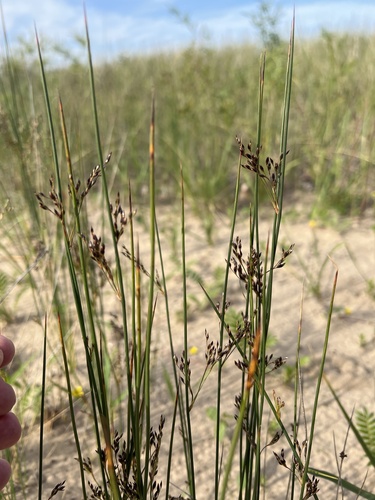
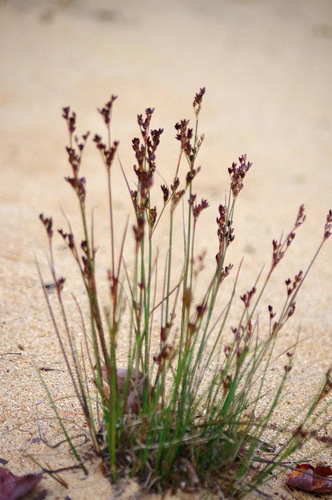
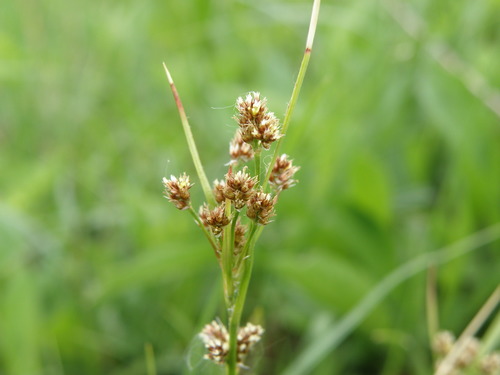
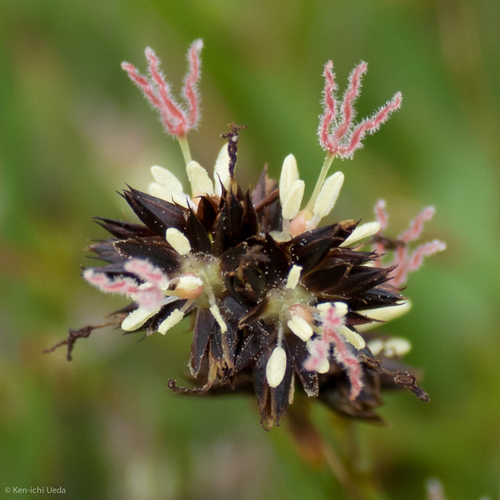
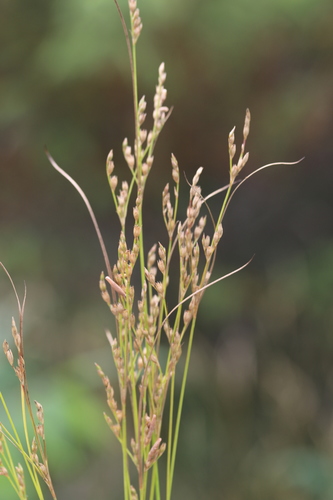
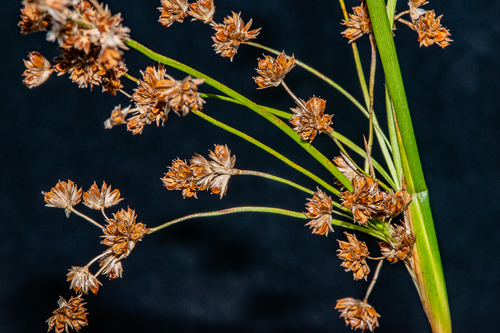
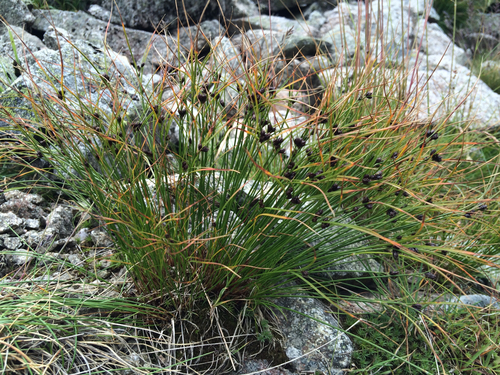
Oreojuncus trifidus is a perennial herb with tufted stems that reach up to 40 centimeters in length, growing either erect or drooping. It produces a small number of grasslike leaf blades that measure up to 12 centimeters long. Its inflorescence holds between one and four flowers, which have brown tepals and six stamens. The fruit produced by this plant is a capsule that is a few millimeters long. The species reproduces both sexually via its flowering structures, and vegetatively through its rhizome, which allows it to form colonies. This species grows across a range of habitat types, with a particular prevalence in alpine environments. It can be found growing in talus, on cliffs and ledges, in fellfields, tundra, and meadows. It also occurs in a wide variety of heath ecosystems. Its growing soils can range from dry to moist, and may be either calcareous or acidic. Soils supporting this plant can be gravelly, sandy, and rich in iron. The species is recognized as a pioneer species that colonizes disturbed areas on ski slopes and roadsides. It often grows alongside many types of mosses and lichens. Oreojuncus trifidus is an amphi-atlantic plant native to northern and eastern Canada, including the Canadian Arctic Archipelago and other low Arctic regions, the northeastern United States, Greenland, Iceland, Scandinavia, northern Britain, and northern Asia. It also grows in the high mountains of southern Europe. While the species as a whole is not rare, some of its local populations face threats. Certain populations in the Adirondacks are damaged by trampling from hikers. Rush habitat on Camel's Hump and Mount Marcy is also negatively impacted by trampling disturbance. Rush-dominated heath in the Cairngorms is also potentially threatened by trampling.