About Oraesia emarginata (Fabricius, 1794)
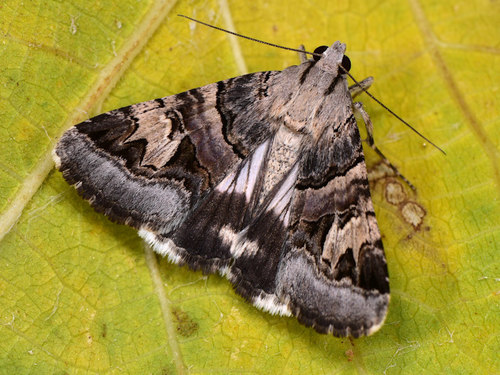
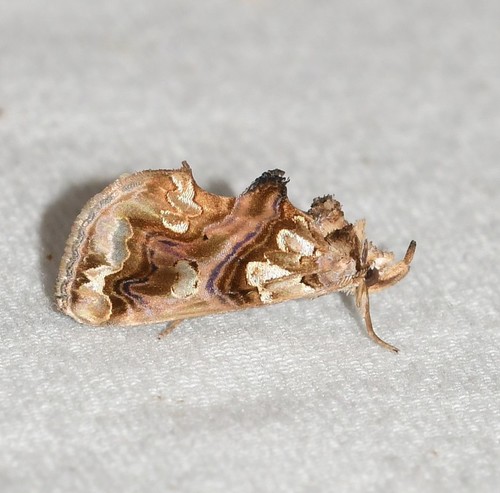
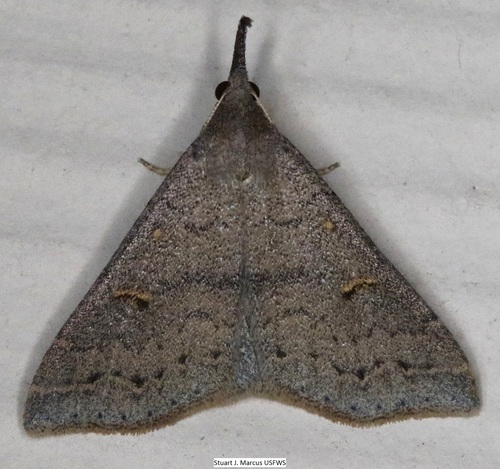
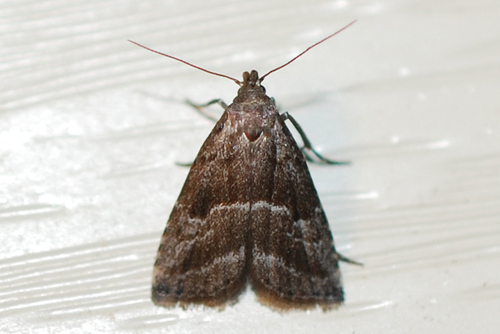
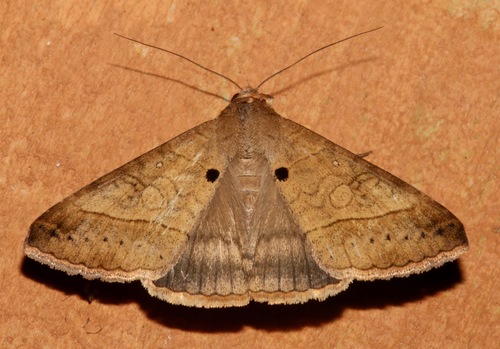
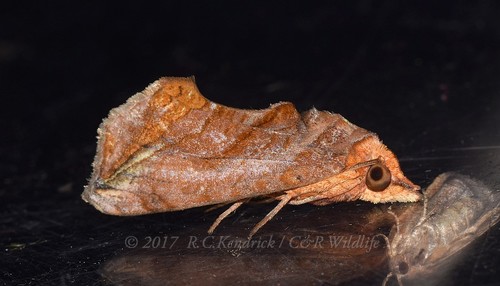
Oraesia emarginata (Fabricius, 1794) has a wingspan of approximately 35–42 mm. In males, the antennae are unipectinate, the palpi have a third joint that extends to a point, and the forewings have an outer margin angled at vein 4. Males have a fiery orange head and collar, a reddish brown thorax, and a fuscous abdomen. Their forewings are reddish brown suffused with purple, marked with numerous indistinct, slightly waved oblique lines. There is a dark streak along the median nervure, and an oblique double line runs from the apex to the inner margin beyond the middle of the wing; the space near the apex within this line is pale, and the area beyond the line is suffused with gold. Male hindwings are ochreous white, suffused with fuscous toward the outer margin. Females have much more variegated forewings, with a diffused chocolate patch below the middle of the cell, and a white streak on vein 2. Both the abdomen and hindwings of females are fuscous. The larvae are dark violet brown, with a sub-dorsal series of scarlet and yellow spots, and a sub-lateral series of white dots. Larvae feed on Menispermaceae species, including Stephania japonica, as well as Cissampelos and Cocculus species. Additional recorded larval food plants are Citrus, Dimocarpus, Ipomoea, Malus pumila, Merremia quinquefolia, Prunus persica, Psidium guajava, Sida, Stephania discolor, Vitis, and Ardenia gummifera. The larvae pierce fruits including peach, loquat, and citrus to suck the juice. This species overwinters in the larval stage, in clusters of weeds and soil cracks around the host plant.