About Opsiphanes cassina Felder, 1862
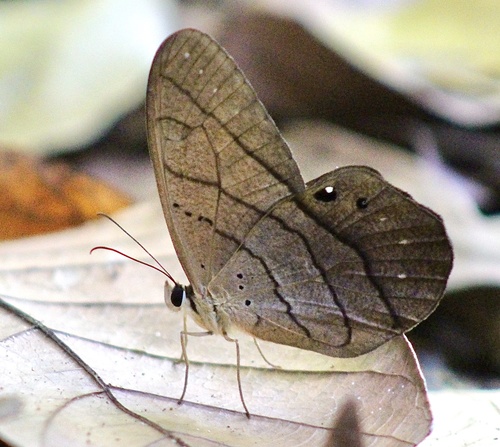
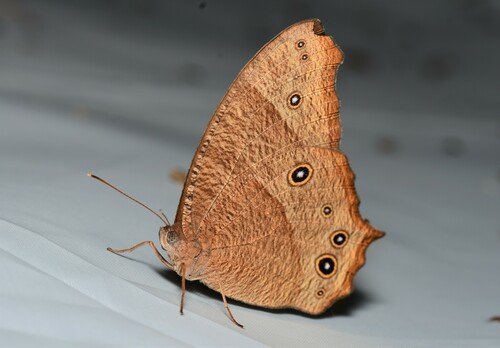
Opsiphanes cassina, first described by Felder in 1862, has different average wingspans between sexes. Females have a wingspan of roughly 70 millimetres (2.8 inches), while males have a smaller wingspan. The uppersides of the wings are dark brown, with yellow-orange bands crossing the forewings and the edges of the hindwings. The undersides of the wings are also brown, and feature several large eyespots. Adult individuals of this species live only around ten days, during which they must complete feeding, mating, and egg laying. The larvae are bright green, and have two prong-shaped protrusions on their rear end. Larval food plants include Cocos nucifera, Livistona species, Acrocomia vinifera, Bactris guineensis, Erythrea salvadorensis, and Roystonea regia. This species is also known as a dangerous defoliating pest of oil palm. This species is distributed from Mexico through to the Amazon basin.