About Oporornis agilis (A.Wilson, 1812)
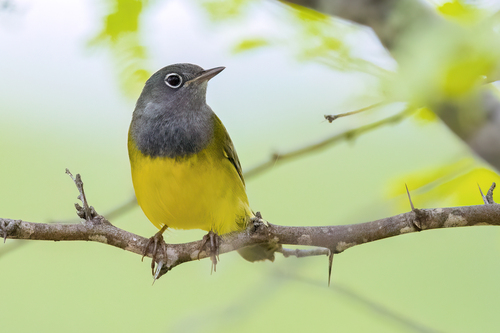
This species, the Connecticut warbler, is a medium-sized warbler. Adults measure 13–15 cm (5.1–5.9 in) in length, with a wingspan of 22–23 cm (8.7–9.1 in). Fledgling Connecticut warblers weigh 10 g (0.35 oz), while adults have an average weight of around 15 g (0.53 oz). Birds preparing for migration put on extra weight for the strenuous journey, and can reach a maximum weight of 25 g (0.88 oz). This species has light yellow underparts and olive upperparts, a light eye-ring, pink legs, a long tail, and a thin pointed bill. Males have a grey hood; females and immature birds are browner and have a whitish throat. Connecticut warblers forage on the ground by picking through dead leaves, or hop along branches. Like most warblers, they mainly feed on insects and other similar small invertebrates, and will occasionally supplement their diet with seeds and berries. These are skulking birds that usually spend their time foraging in dense, low vegetation, a behavior that often makes them difficult to observe clearly. Despite the common name Connecticut warbler, the species only rarely visits Connecticut during migration. It was named by Alexander Wilson, who observed the first classified specimen. While these birds are fairly elusive, their populations appear to be declining due to loss of winter habitat. Their breeding habitat consists of bogs or open deciduous woods near water, especially stands of poplar, spruce, tamarack or aspen, located in central Canada and the U.S. states bordering the Great Lakes. These breeding habitats are generally located in rather remote, hard-to-access areas that make fieldwork difficult, so there is very little existing data on this bird species. The nest is an open cup, well concealed in moss or a clump of grass. It is constructed from dry grasses, weed stalks, and horsehairs.