About Ononis natrix L.
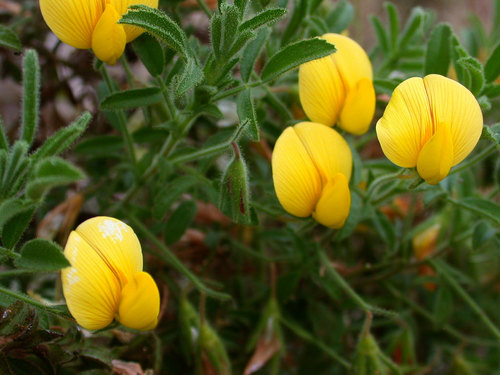
Ononis natrix L. is a perennial plant that grows 50–100 cm tall. It is woody at the base and entirely covered in viscous glandular structures. Its leaves are composed of three oblong, finely toothed leaflets. Flowers form leafy racemes at the tips of stems. Peduncles are long, each holds a single flower, and are often awn-tipped. Calyx lobes are much longer than the calyx tube. The yellow corolla measures 15 mm, and is twice as long as the calyx. The standard petal has red-brown striations. This plant grows in sandy and stony locations on limestone. Within the region, it is found on the coast, lower and middle mountains, Beqaa, South, and Antilebanon. Its broader geographic range includes Syria, Lebanon, Palestine, Jordan, Egypt, Libya, Tunisia, Algeria, Morocco, and the Circum-Mediterranean area. The genus name Onônis (alternatively spelled anônis) is the original Greek name for a Mediterranean species in this genus. It is sometimes interpreted as being formed from the Greek words onos, meaning donkey, and onesis, meaning happiness, because some rest-harrow species were thought to be favored by donkeys. The specific epithet natrix is the name of a water snake; it was given to this plant because its pollen tube releases ciliated antherozoids that swim, much like a water snake, before entering the embryo sac. In Arabic, this plant is known as lissayq, and its branches are used in the preparation of raisins.