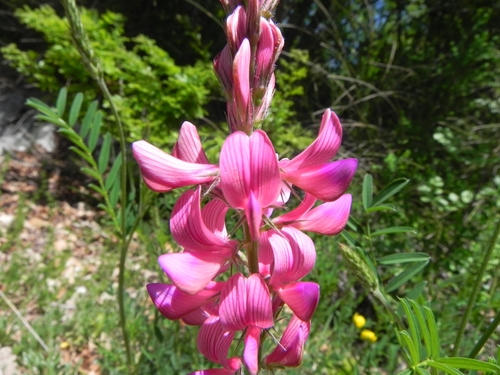
About Onobrychis viciifolia Scop.
Onobrychis viciifolia Scop., also called O. sativa or common sainfoin, was an important forage legume grown in temperate regions until the 1950s. It was replaced by higher-yielding alfalfa and clover species during the Green Revolution. Because it has anthelmintic properties, common sainfoin acts as a natural alternative to medicinal drugs for controlling nematode parasitism in the guts of small ruminants. This benefit is the main reason O. viciifolia has returned to scientific research agendas in recent years.
To produce high levels of condensed tannins, common sainfoin should be sown as a pure stand. It has low competitiveness against other plants, so weed infestations must be controlled, especially during the first growing year. Fertilizer applications are normally not required to get satisfying yields, but applying slurry or phosphate can boost the crop's initial growth. Pests and diseases almost never cause serious problems for common sainfoin.
Common sainfoin has higher tolerance to frost and drought than other forage legumes, such as alfalfa or different clover species. On the other hand, O. viciifolia is much less tolerant of waterlogging than other forage legumes. For this reason, growers should avoid planting it in clayey soils with poor drainage. Acidic soils are also not suitable for cultivating common sainfoin.
Seedbed preparation and the sowing procedure are carried out in a similar way, and with the same machinery, as for cereal cultivation. Growers should sow around 800 seeds per square meter on a weed-free seedbed, between spring and late summer. In the year the crop is established, common sainfoin can be cut twice per year. After establishment, up to four cuts per growing season are possible. Careful mowing is important to minimize harvest and storage losses from plant material disintegration. Common sainfoin can be stored and fed to animals as hay, pellets, or silage.