About Oncostoma olivaceum (Lawrence, 1862)
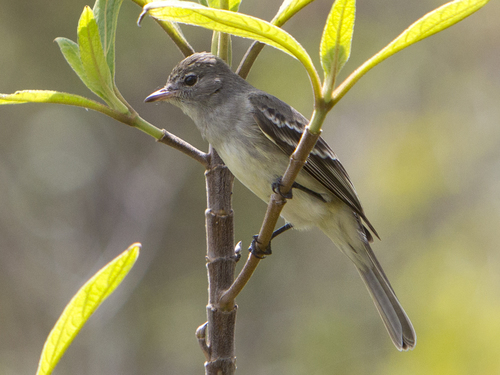
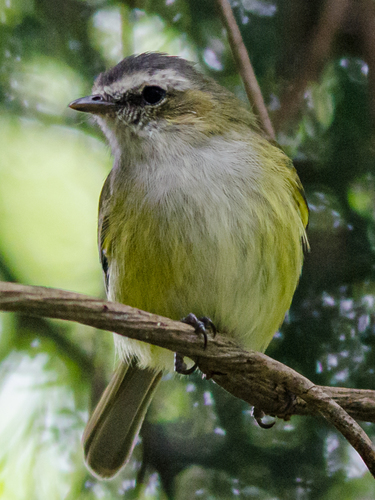
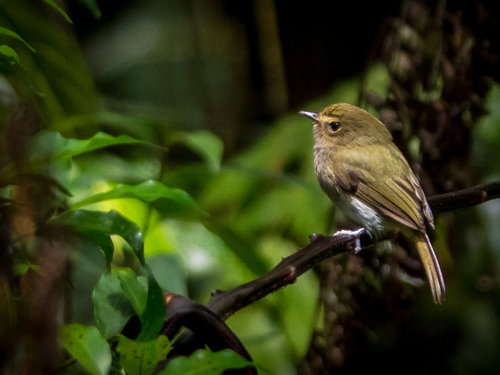
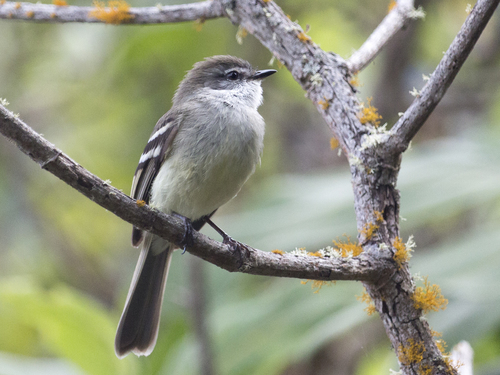
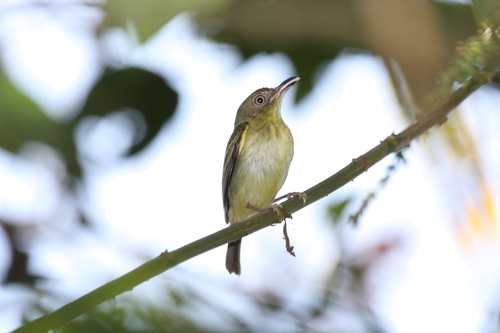
The southern bentbill (scientific name Oncostoma olivaceum (Lawrence, 1862)) is approximately 9 cm (3.5 in) long and weighs around 6 to 7 g (0.21 to 0.25 oz). It has a distinctive, fairly thick downcurved bill. Males and females have identical plumage. Adults have a mostly olive head with a whitish area above the lores. Their back, rump, and uppertail coverts are olive. Their wings are dusky, with lemon yellow edges on the flight feathers and greenish yellow tips on the coverts; these greenish yellow tips form two indistinct wing bars. Their tail is dusky olive. Their throat and breast are yellowish white marked with olive streaks, their belly is yellow, and their flanks are olive-yellow with some olive streaks. They have a pale yellow to dusky iris, a gray bill, and dusky pinkish legs and feet. The southern bentbill is distributed across central and eastern Panama, starting from western Colón Province on the Caribbean side and the Canal Zone on the Pacific side. Its range extends into northern Colombia, reaching most of the way east to the Venezuelan border and extending south to the departments of Chocó and Cundinamarca. It lives in the interior and edges of humid lowland evergreen forest, secondary woodlands, and shrubby clearings in the tropical zone. Across all these landscapes, it prefers thickets and dense undergrowth. Its elevational range extends from sea level up to 1,300 m (4,300 ft).