About Oncideres cingulata (Say, 1827)
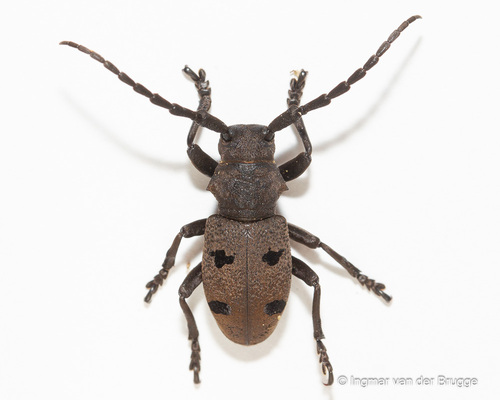
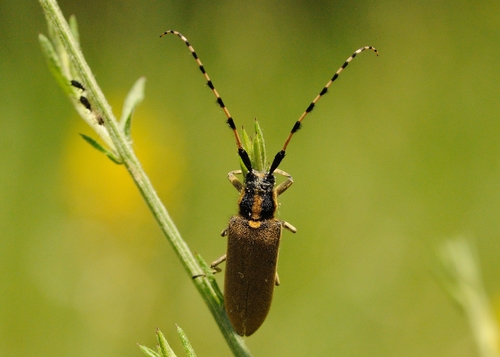
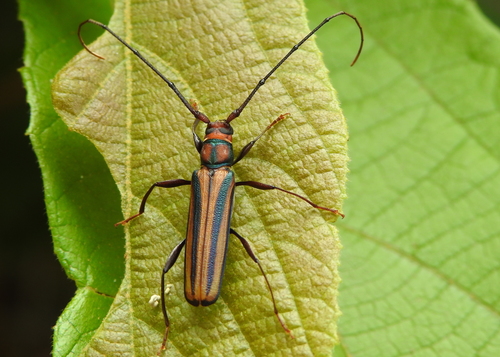
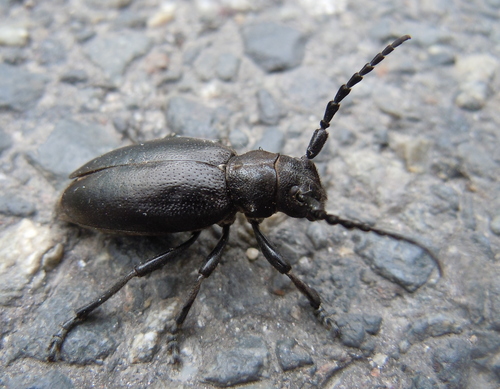
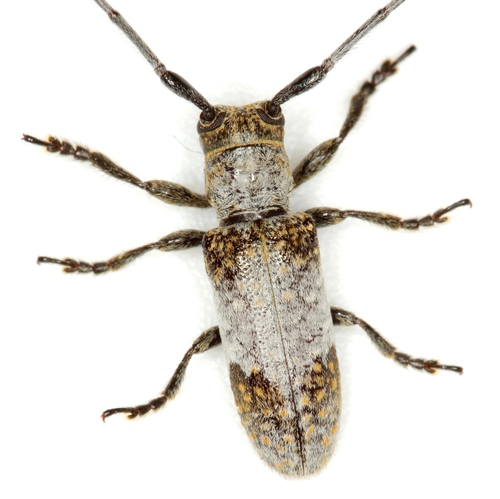
Oncideres cingulata, commonly called the twig girdler, is a brownish-gray beetle that belongs to the longhorn beetle family. Adults typically measure 1⁄2 to 5⁄8 inch (13 to 16 mm) in length, and are distinguished by their long antennae, which reach 1⁄2 to 1 inch (13 to 25 mm) long. This species is distributed across the Eastern and Gulf Coast regions of the United States. The twig girdler is well known for the damage it inflicts on pecan plantations, and it also damages lumber trees including hickory, oak, poplar and elm, as well as a variety of fruit trees. In late summer and fall, adult females use their mandibles to girdle small branches that are 1⁄4-to-1⁄2-inch (6.4 to 12.7 mm) in diameter, cutting through bark and into the wood. The resulting cut looks almost identical to a cut made with a small saw. Females lay one egg per individual cut made into the wood, positioned above the girdled section of the branch. Soon after a twig is girdled and has eggs inserted into it, the twig dies and falls from the tree to the ground. The white, legless larva overwinters inside the fallen twig. After overwintering, the larva eats its way through the woody tissue of the dead twig to reach the girdled point. It eventually seals itself inside the twig using shredded wood fibers, then pupates for a period of 12 to 14 days. New adults emerge and mate in summer, feeding on tender woody shoots. This completes the species' single annual generation. Twig girdler infestations are particularly problematic in pecan plantations, because the beetles become active late in the season close to when nuts are harvested. Collecting and burning dead fallen twigs during the winter is the primary method for controlling these infestations. Infestations can cause significant reductions in the following year's crop, and they can also lead to the same structural problems that come from inexpert pruning of trees.