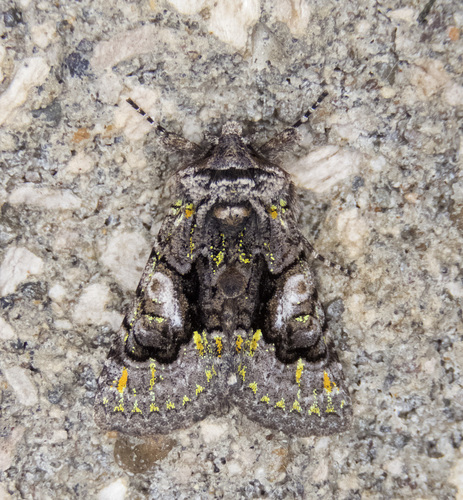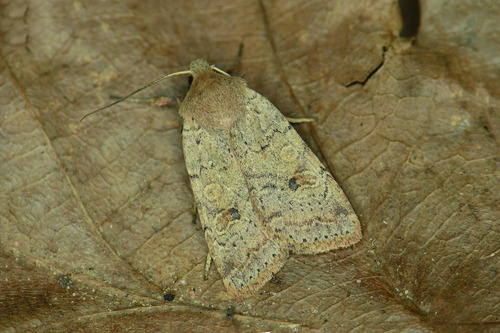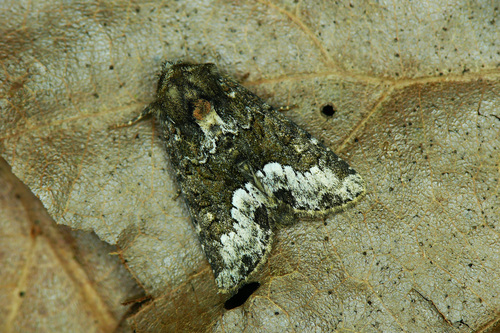
About Oligia strigilis (Linnaeus, 1758)
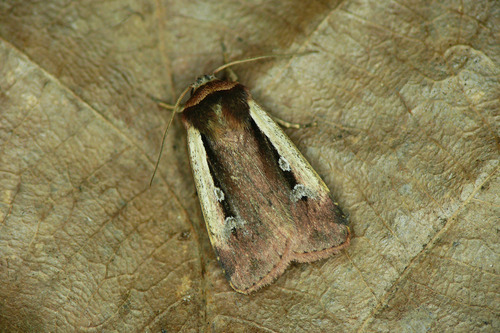
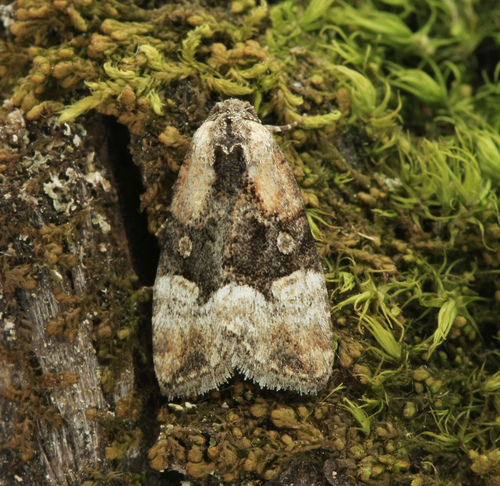
Technical description and variation: The wingspan of Oligia strigilis ranges from 24 to 29 mm. Forewings may be brownish grey, reddish grey, reddish brown, or blackish. The area between the outer and submarginal lines is often white, grey, luteous (muddy yellow), rufous, or matches the ground color of the wing. All three stigmata are outlined in black, and are either paler than the wing's ground color or obscured by dark suffusion. The inner and outer lines are blackish, edged paler on the opposite side, and shaped as dentate lunules; the pale edging of the outer line is generally more conspicuous, appearing whitish below the middle. The terminal area is dark, forming two separate blotches, with one on each fold. There is a dark costal blotch located before the submarginal line. A thin black dash runs from the base below the cell, and a second black dash sits above the inner margin near the base. Hindwings are either dark or light fuscous. The type form has a whitish outer band and a ground color that is reddish grey or reddish brown. This species is nearly indistinguishable from its close relatives, the rufous minor (O. versicolor) and the tawny marbled minor (O. latruncula). Generally, genital dissection is required to confirm identification. See Townsend et al. for genitalia images and an identification key. Oligia strigilis averages slightly larger than these two related species, though the size ranges of all three overlap.