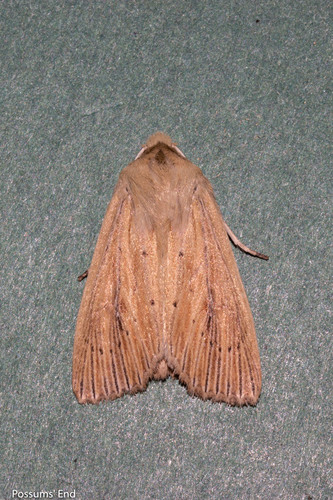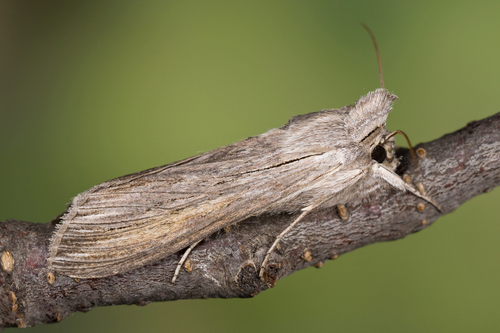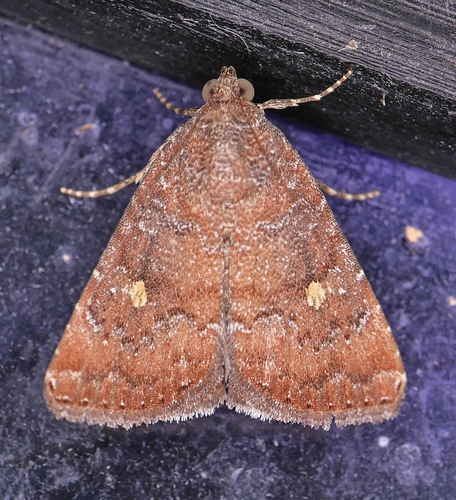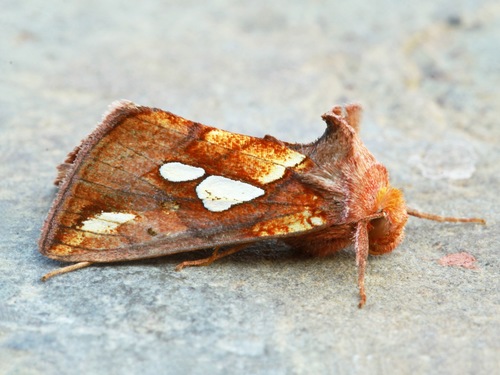
About Oligia latruncula (Denis & Schiffermüller), 1775
Oligia latruncula, commonly known as the tawny marbled minor, is a species of moth in the family Noctuidae. This species was first formally described by Michael Denis and Ignaz Schiffermüller in 1775. Its distribution spans across Europe, reaching as far north as northern Scotland and central Fennoscandia, and extending south to central Spain, Sicily, and Greece. To the east, its range reaches into Western Asia. In the Alps, this species can be found at altitudes up to 2000 meters.
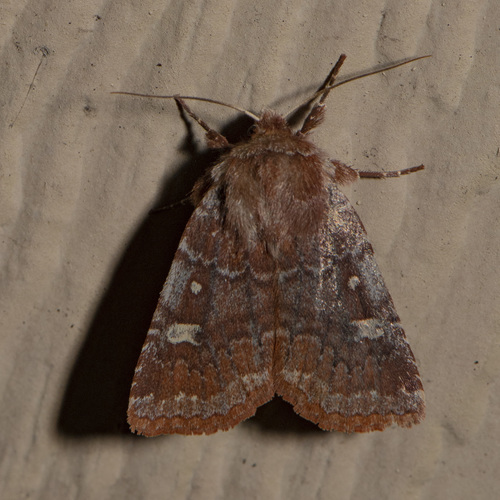
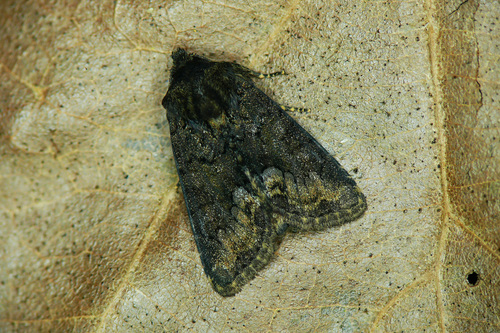
Oligia latruncula is extremely similar in appearance to two closely related species: the marbled minor (Oligia strigilis) and the rufous minor (Oligia versicolor). Reliable identification of this species typically requires close examination of its genitalia. Refer to the work of Townsend et al. for genitalia images and an identification key. This species has a wingspan measuring 24–27 mm, and is usually the smallest of the three similar species, though all three overlap in size. Clearly marked specimens often have noticeably dark forewings, with a blackish basal area and a coppery brown (rather than whitish) subterminal band. Melanism is very common in this species, and in some areas 100% of the population consists of all-dark specimens.
Oligia latruncula flies at night from May to August; this flight season information refers specifically to the British Isles, and may differ in other parts of the species' range. It is attracted to both light and sugar. Its larvae feed internally inside the stems of various grasses, including species from the genera Calamagrostis and Dactylis. After feeding, larvae pupate inside a cocoon located among plant roots. This species overwinters in the larval stage.