About Olea europaea L.
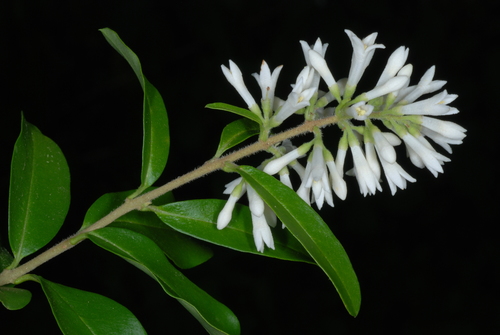
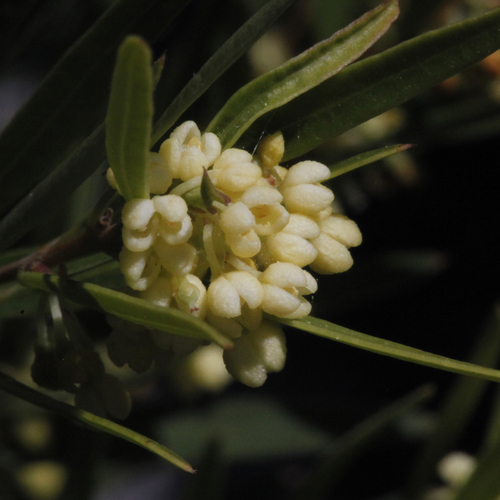
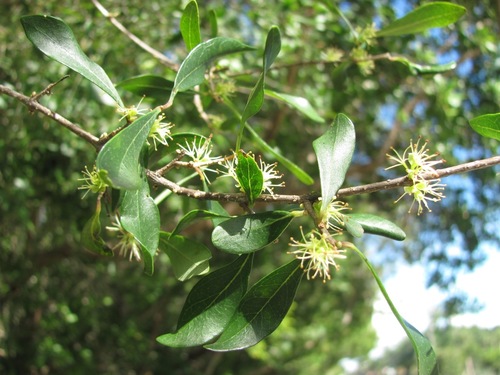
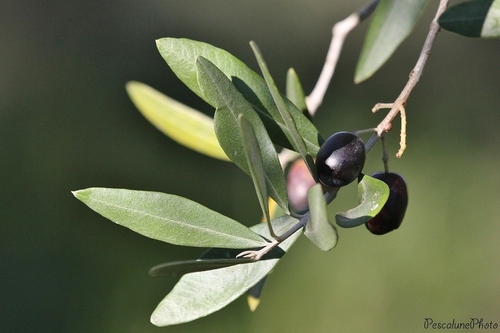
Olea europaea L., commonly called the olive tree, is an evergreen tree or shrub native to Mediterranean Europe, Asia, and Africa. Most individuals are short and stout, rarely growing 8 to 15 meters (25 to 50 feet) tall. One unique cultivar, Pisciottana, which numbers only 40,000 trees restricted to the area around Pisciotta in Italy's southern Campania region, often grows taller than this range, with correspondingly large trunk diameters. Its leaves are silvery green and oblong, measuring 4 to 10 centimeters (1+1⁄2 to 4 inches) long and 1 to 3 centimeters (3⁄8 to 1+3⁄16 inches) wide. The trunk of the olive tree is typically gnarled and twisted. Small white flowers grow in racemes that emerge from leaf axils, usually on wood grown the previous year. Each flower has four yellowish-white petals fused at the base, attached to a base of four fused green sepals. Flower buds grow slowly over 4 to 6 weeks to reach approximately 2 centimeters in length before blooming. They bloom more quickly: blooming takes 5 to 6 days in hot weather, and up to 2 weeks in colder areas. Pollination and fertilization also occur faster in hotter climates. The fruit is a small drupe that is 1 to 2.5 centimeters (3⁄8 to 1 inch) long when ripe. Wild olive plants produce smaller, thinner-fleshed fruit than orchard-grown cultivars. Olives are harvested when their color ranges from green to purple. O. europaea fruit contains a hard pyrena, called a "pit" in American English and a "stone" in British English. The olive tree is cultivated for its fruit, olive oil, fine wood, olive leaves, and as an ornamental plant. Around 80% of all harvested olives are processed into olive oil, while the remaining 20% are used as table olives. The olive is one of the three core ingredients, called the "trinity" or "triad", of Mediterranean cuisine, alongside wheat (used for bread, pasta, and couscous) and grapes (used for wine). The earliest evidence of olive domestication comes from a Chalcolithic archaeological site at Teleilat el Ghassul, located in modern Jordan. Ancient farmers claimed olive trees would not grow well when planted more than a set distance from the sea; Theophrastus recorded this distance limit as 300 stadia, or 55.6 kilometers (34.5 miles). Modern growing experience does not always confirm this claim. While olive trees do prefer coastal conditions, they have been grown successfully further inland in many regions with suitable climates for a long time, especially in the southwestern Mediterranean (Iberia and northwest Africa), where winters are mild. A discussion of olive tree cultivation in Spain is included in Ibn al-'Awwam's 12th-century agricultural text, Book on Agriculture. Today, olive trees are cultivated across many global regions with Mediterranean climates, including South Africa, Chile, Peru, Pakistan, Australia, and the western United States (especially California). They are also grown in regions with temperate climates, including New Zealand, Uruguay, and Argentina's Córdoba Province.