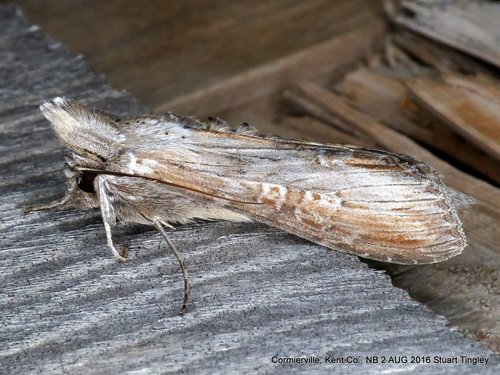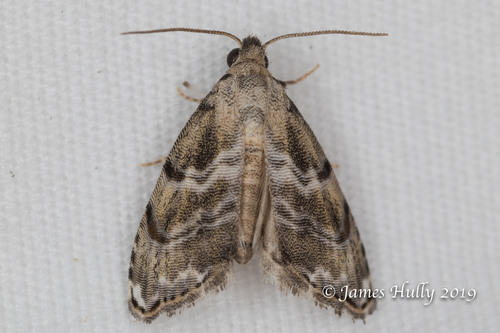
About Ogdoconta cinereola Guenée, 1852
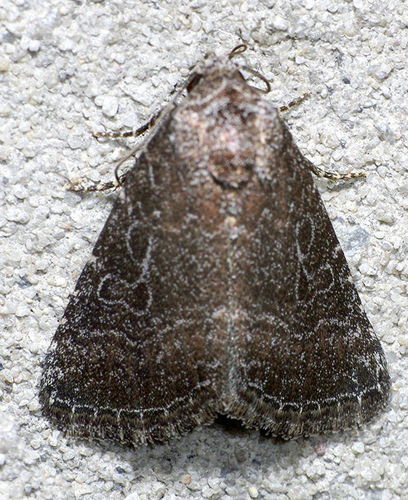
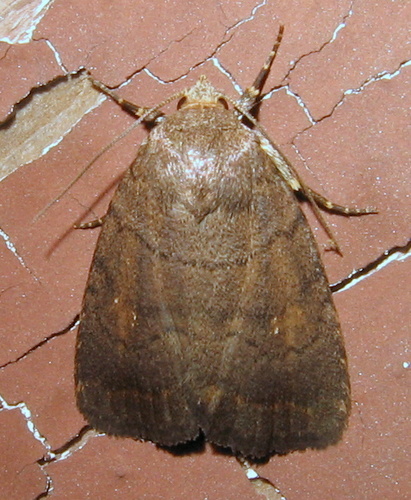
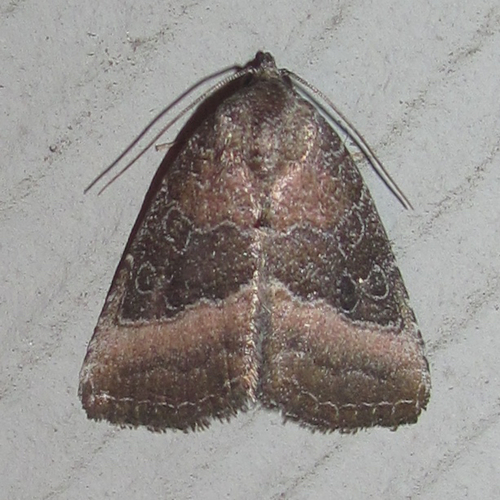
Ogdoconta cinereola, commonly called the common pinkband moth, is a moth species belonging to the family Noctuidae. It is distributed across eastern, central, and south-western North America. Its range extends from southern Ontario and Quebec in the north, south to southern Florida. On the western edge of its distribution, the species occurs from Manitoba south through the Great Plains of Nebraska and Iowa, continues south through most of Texas, and extends west across southern New Mexico to Santa Cruz County in south-eastern Arizona. The species' range also extends south into the Mexican state of Coahuila in northern Mexico. The forewings of this moth measure 9.5–14.5 mm in length. The forewing is light fuscous brown, and the subterminal region (the area between the postmedial and subterminal lines) is suffused with a pinkish tinge. The medial and basal areas of the forewing are covered in fine white speckles. The antemedial line is a faint, scalloped white line. The reniform and orbicular spots are faint, but can usually be recognized by their fine white outlines. The claviform spot is not present. The postmedial line is a white, nearly straight, oblique line with a slight bend pointing toward the base. The subterminal line is mainly marked by a brown shading that forms the end of the pink suffusion on the subterminal region. The hindwings are suffused with brown. Males and females have a similar appearance, though the female's hindwing is typically darker. In the northern portion of the species' range, adult moths are active in flight from May to September; in Texas and Florida, adults are active from April to October. The larvae feed on species from the plant families Amaranthaceae, Asteraceae (especially Ambrosia species), Fabaceae, Labiatae, and Poaceae.