About Oemleria cerasiformis (Torr. & A.Gray ex Hook. & Arn.) J.W.Landon
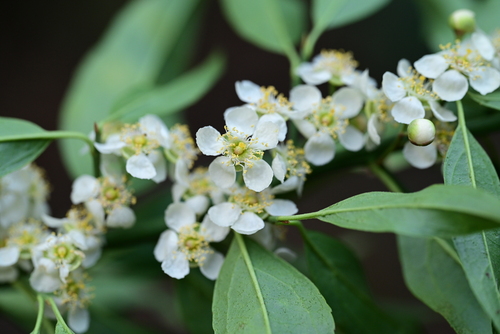
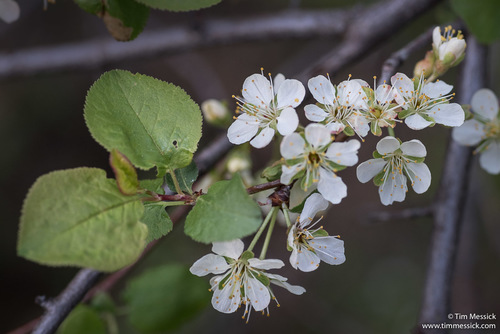
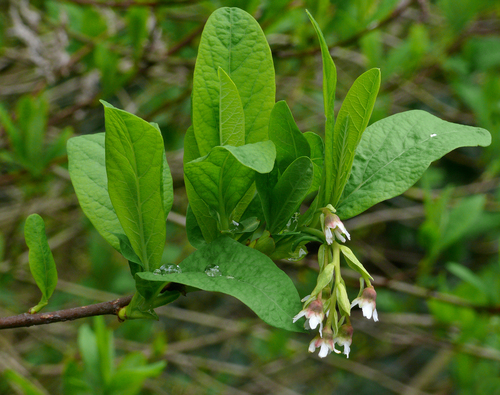
Oemleria cerasiformis, commonly known as osoberry, squaw plum, Indian plum, or Indian peach, is the only surviving species in the genus Oemleria. This deciduous perennial shrub can reach up to 7 meters in height, with spreading branches that bear small white flowers. Its fruit is bitter when unripe, becoming sweet only when fully ripe. Osoberry is dioecious: only female plants produce fruit, while male plants produce large amounts of pollen and flowers for reproduction. Its flowers are pollinated by insects and hummingbirds, and its fruits are eaten by birds and mammals, which disperse the species' seeds through their droppings, a process called endozoochory. Fossil records show this species had a similar geographic range during the Eocene epoch. Oemleria cerasiformis is native to the Pacific coast and coast ranges of North America, growing from British Columbia, Canada, south to Santa Barbara County, California, United States. This species is one of the first plants to bloom and produce new leaf buds in late winter. Its favored habitat includes full sun exposure, moist (not winter-saturated) soil, and low elevation, though it can grow at elevations up to 1,500 m (5,000 ft). It most commonly grows below 300 m (1,000 ft) in elevation. Habitats where osoberry grows include mature forests, second-growth forests, stream terraces, and roadside margins. Osoberry is shorter than most Pacific Northwest trees. Its early leaf budding lets it access sunlight that becomes unavailable once taller nearby plants grow their full leaves and block incoming sunlight. Its flowers are pollinated by a range of native pollinators including bees, moths, butterflies, and hummingbirds; the nectar of osoberry flowers is an important early spring food source for these animals. West Coast Native American tribes used osoberry for food, medicine, and tools, utilizing its fruit, twigs, and bark for food, teas, and medicinal preparations. Because it is one of the first tree-borne fruits to ripen each summer, it was highly valued by both indigenous peoples and local wildlife.