About Oecanthus pellucens (Scopoli, 1763)
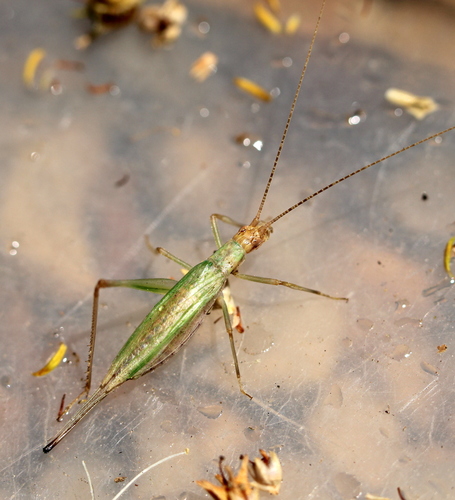
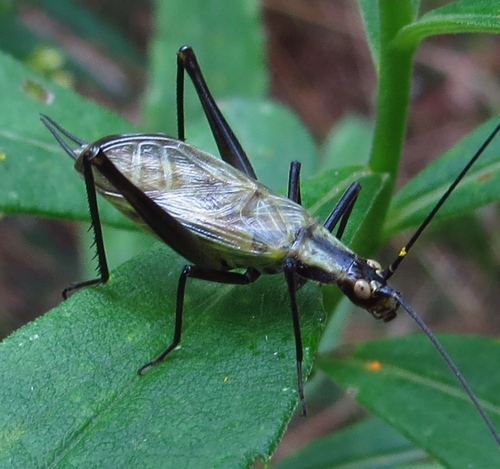
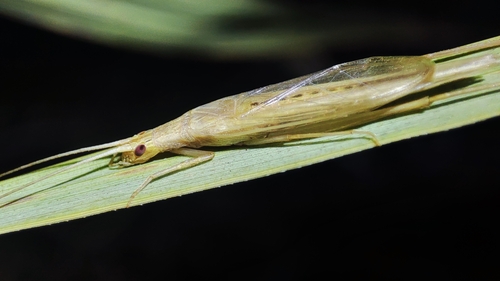
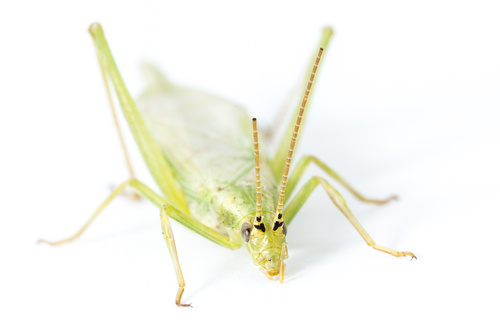
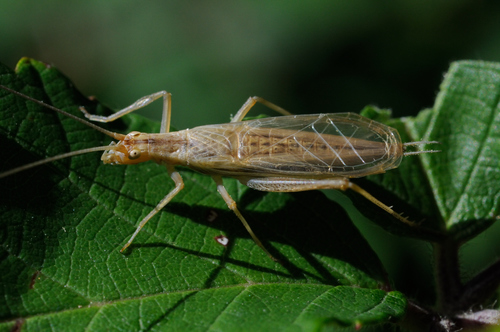
This species is scientifically known as Oecanthus pellucens (Scopoli, 1763). Adult males of Oecanthus pellucens reach a length of 10 to 13 millimeters, which equals 0.39 to 0.51 inches. Females are slightly larger than males, measuring about 11 to 14 millimeters, or 0.43 to 0.55 inches, in length. The coloration of this species is yellowish-brown and straw-colored. Its overall body shape is very elongated and slender. The wings usually extend slightly beyond the tip of the abdomen, though they may be either shorter or longer than this average. Male wings are larger than female wings. The antennae of Oecanthus pellucens are longer than its entire body. Females have a long, slightly curved ovipositor, which can be identified by its distinct club-shaped end. This species is distributed across most of Europe, and it is particularly common in Mediterranean-bordering countries, with its main range concentrated in Southern Europe. Its northern range boundary runs through northern France, Belgium, southern Germany, the Czech Republic, and southern Poland. The first apparently viable British colony of this species was discovered near Dungeness in Kent in 2015. A closely related, very similar species, Oecanthus dulcisonans, also occurs alongside Oecanthus pellucens in southern Europe. Beyond Europe, Oecanthus pellucens is also found in the eastern Palearctic realm, the Near East, and North Africa. The typical habitat of Oecanthus pellucens consists of sunny meadows with tall vegetation, and dry, warm, nutrient-poor areas including grasslands, sand dunes, and brownfield lands.