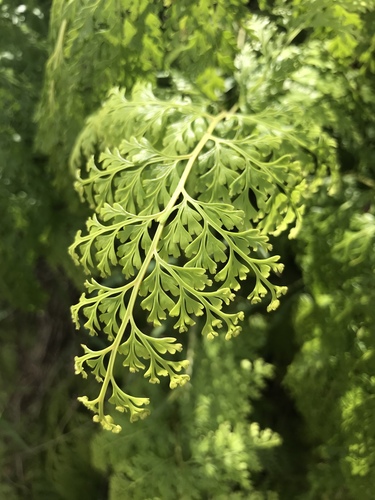
About Odontosoria chinensis (L.) J.Sm.
Taxonomic Classification
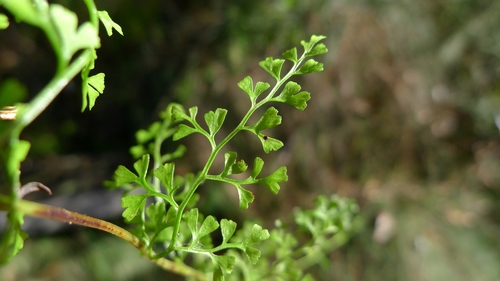
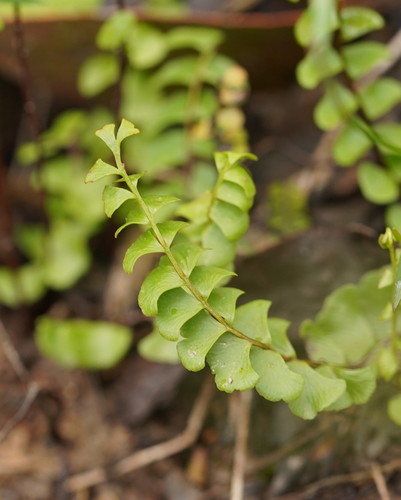
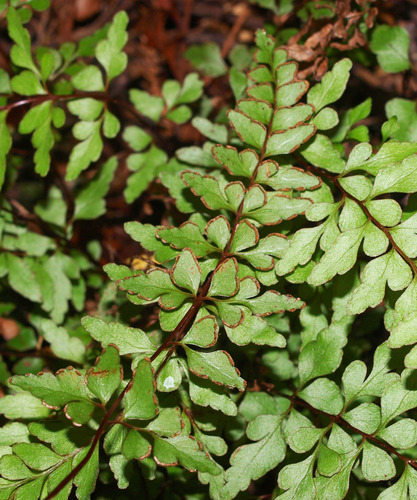
Odontosoria chinensis (L.) J.Sm. is a fern species that belongs to the Lindsaeaceae family.
Common Names
It is commonly known as lace fern, and in the Hawaiian language it is also called pala'ā, palae, or palapala'ā.
Native Distribution
This species is native to a range that extends from India to Hawai'i, south to Sumatra, Borneo and the Philippines, and also grows in other tropical and subtropical regions.
Habitat Locations
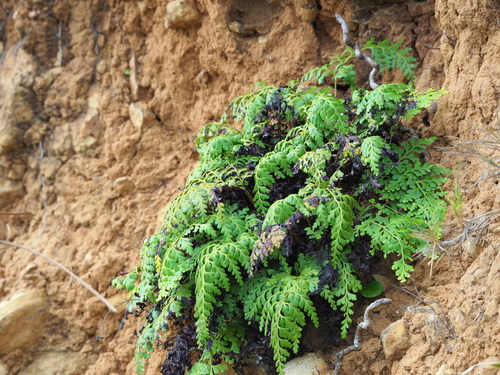
It is most often found in forest openings and disturbed sites including landslides, and along trails or roads.
Growing Conditions
It grows in moist, shady habitats at elevations ranging from sea level up to 4,000 feet.
Traditional Dye Use
Historically, Hawaiians produced red-brown dye from the old fronds of this fern.
Traditional Medicinal Use
Pala'ā was used to treat so-called "female ailments".
Lei Making (Single Material Technique)
It can be made into a lei through the hili or hilo technique, a braiding or plaiting method that uses only one type of plant material.
Lei Making (Mixed Material Technique)
It can also be incorporated into haku lei alongside other plants using the wili, or winding, method with a backing.