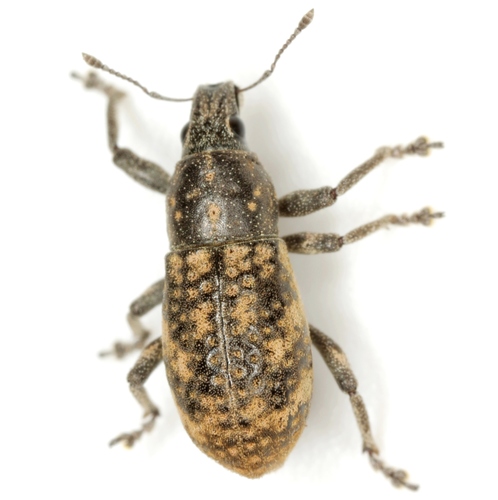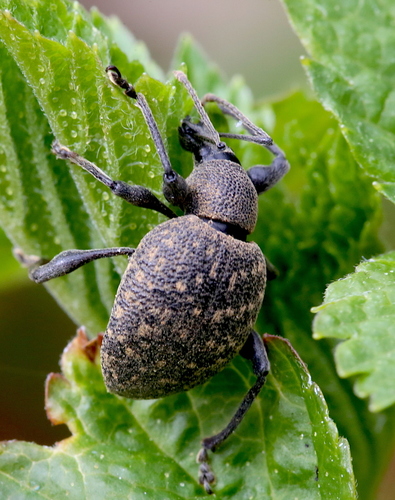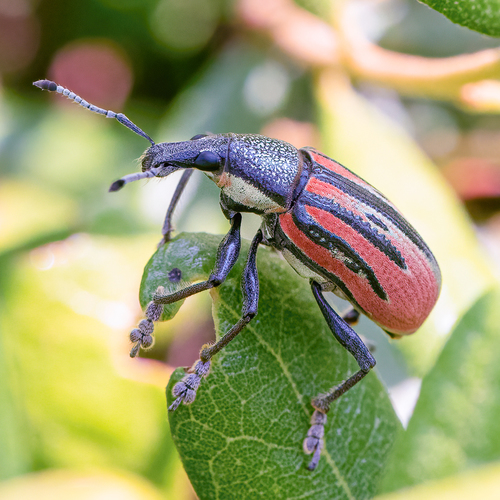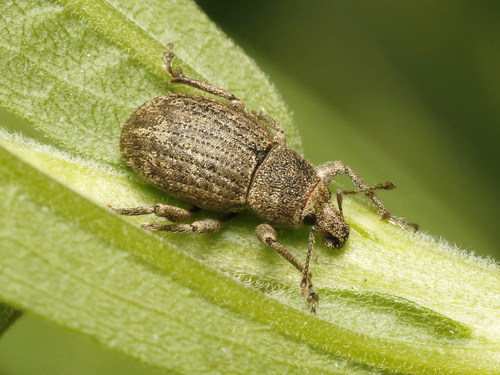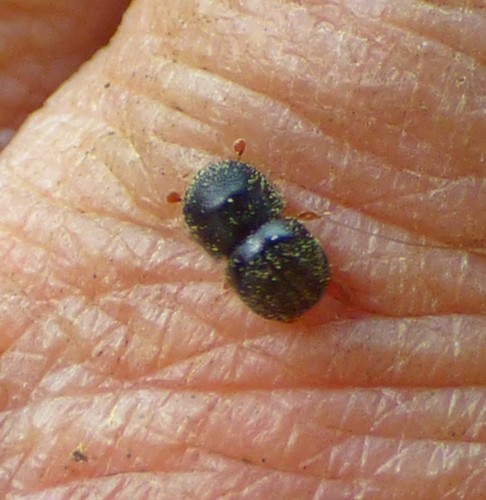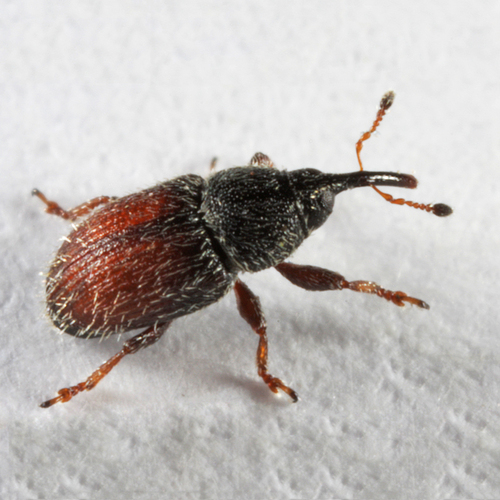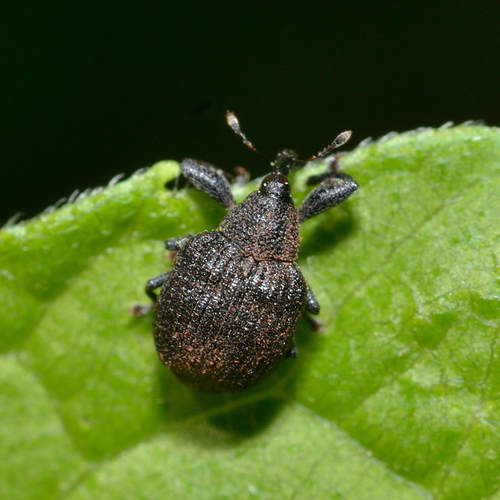
About Odontopus calceatus Say & T., 1831
This section covers the damage caused by Odontopus calceatus (yellow poplar weevil) and available control methods. Adult weevils make brown feeding pits that are around the size of a grain of rice. They chew through a leaf's epidermis, and prolonged feeding can result in small holes in leaves. Heavy infestations can also cause extensive leaf browning. Weevil larvae develop as internal leaf miners, and eat the leaf midrib as they mature. If larval mining causes enough injury, mined leaves will eventually break. Although these weevils damage foliage, they do not impact the overall health and longevity of established trees. They are typically more of a nuisance than a serious threat, and generally only cause aesthetic harm. In most years, natural enemies keep weevil populations under control – parasites sometimes destroy more than half of a weevil's pupal population. This natural parasite control has been observed to fail every few years. Chemical control options are also available to eliminate both adult and larval weevils. Contact or stomach insecticides should be applied as soon as the first adult feeding spots are seen on host leaves. A general guideline is to apply insecticide when feeding damage accumulates to 10% or more across all foliage. Since spring adults feed and move between April and early June, a second insecticide application may be required. Systemic insecticides are used to target larvae. These are best applied when eggs have just been laid, or while larval mines are still green in color.
For distribution and host information, the yellow poplar weevil is typically found on yellow-poplar, sassafras, and magnolia trees. Its range extends across all areas east of the Mississippi River where its native host trees grow. Yellow-poplar is noted as its preferred host. Historically, infestations have been localized to natural hardwood forests, and have rarely been classified as a major threat. However, during the 1960s, multiple outbreaks caused extensive foliage loss in yellow-poplar populations in the Ohio River Valley and Appalachian Mountain regions. Recent concerns center on young yellow-poplar transplants planted in urban and suburban landscapes. Severe infestations in saplings can damage tree foliage, reduce their ornamental value, and potentially lead to low survival rates.