About Odontocynips nebulosa Kieffer, 1910
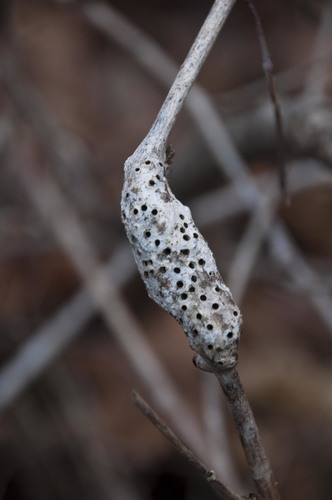
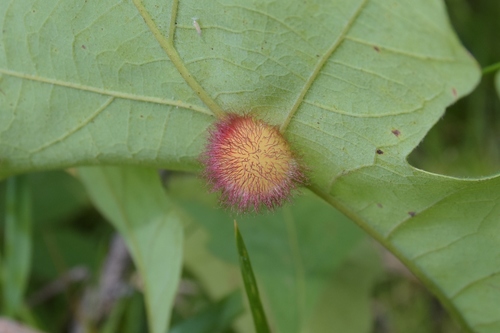
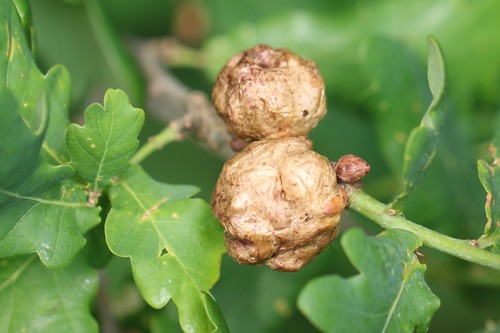
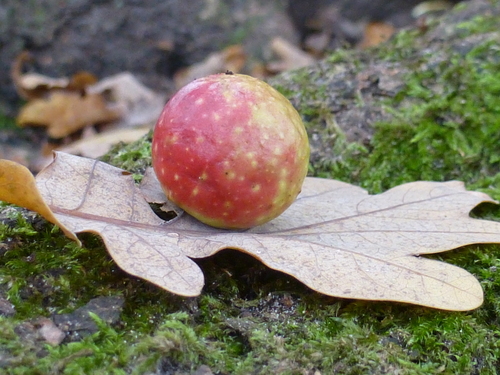
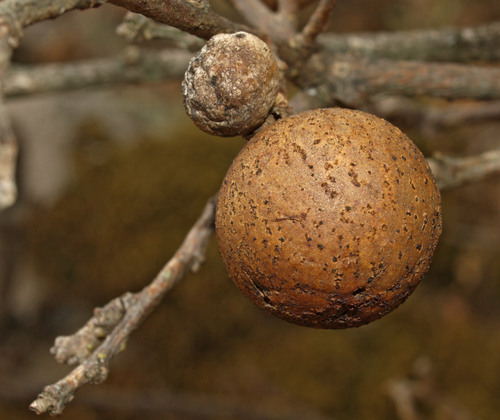
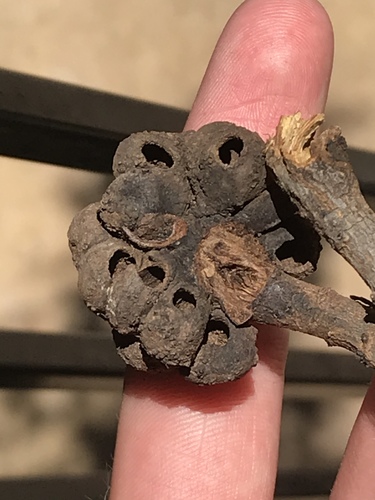
The adult of Odontocynips nebulosa is a small wasp that is rarely observed. Galls are the most common visible sign of this species' presence. These galls develop on the roots of young oak shoots, and sometimes form 5–10 cm underground. Single galls are globular, with a diameter of 10–13 mm, but they often cluster together into irregular, lobed, polythalamous (many-chambered) masses that can reach 8 cm in diameter. Fresh galls are covered with smooth, light-colored bark that matches the appearance of the host oak root, and they harden into a woody texture when they dry out. The internal larval cavities inside the galls measure 6–8 mm in diameter. This wasp occurs across the southeastern and central United States, with its range stretching from Florida to Texas, and north as far as Missouri and Arkansas. It inhabits areas where young oak shoots grow on tangled roots in dense thickets with accumulated humus. Odontocynips nebulosa relies on oak trees as hosts; recorded host species are Quercus chapmanii, Quercus fusiformis, Quercus geminata, Quercus lyrata, Quercus minima, Quercus stellata, and Quercus virginiana. Female wasps lay their eggs inside the root tissue of host oaks. Chemical secretions from the developing larva trigger the oak to form the gall, which provides both food and protection for the larva. The full life cycle of this species may take two years to complete. Galls collected in autumn have been found to hold pupae in October, with mature adults developing later that same month. Adult wasps emerge from the galls in late winter to early spring, between February and March.