About Ochropleura plecta Linnaeus, 1761
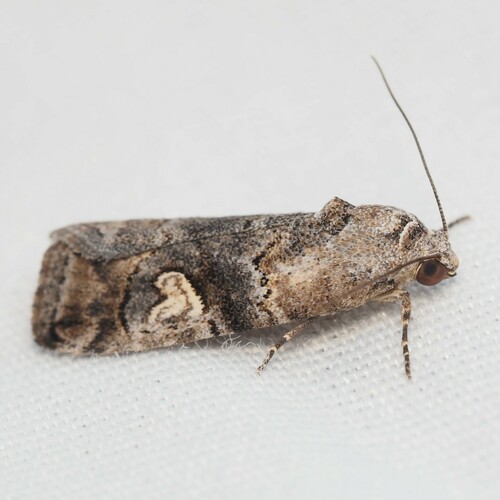
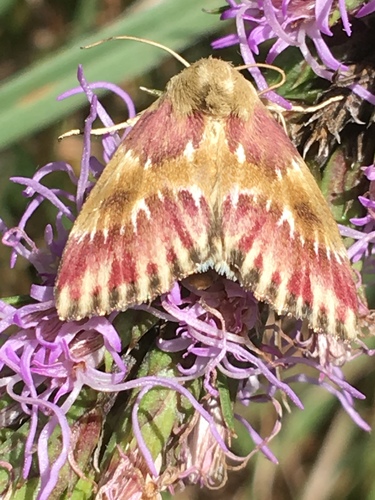
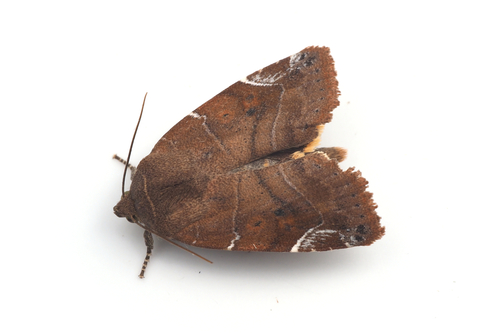
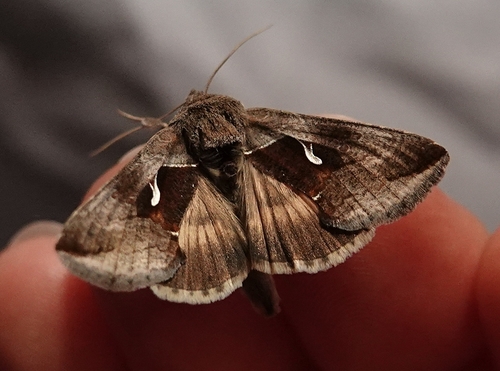
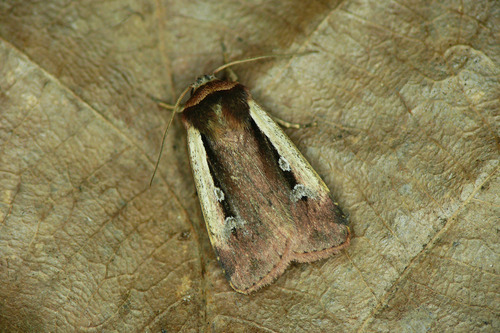
Technical description and variation: The wingspan of this species is 28–34 mm. Its forewings are red-brown and suffused with purple. A broad cream-colored costal streak runs to the outer line, and this streak is sometimes speckled with red. The cell and a basal streak below the median vein are blackish or deep red. The orbicular and reniform stigmata have bright pale rings and grey centers; a small black blotch sits behind the reniform stigma. The lines on the forewing are rarely visible. The hindwing is whitish. The patagia are red-brown, and the dorsum is greyish fuscous; the dorsum may have a cream-colored basal half, or it may be entirely cream-colored. Several named aberrations of the species are recognized. The form ab. unimacula Stgr., now treated as a subspecies from Spain, has an obsolete orbicular stigma. The form ab. anderssoni Lampa from Scandinavia has blackish purple forewings. The form ab. glaucimacula Graes. from Amurland has smaller stigmata similar to those of leucogaster Frr., now classified as a full species; these stigmata are pearl grey in color. In this form, the outer line of the forewing is well marked, and it is also indicated on the hindwing by vein dots. The patagia are black brown in ab. glaucimacula. The form ab. ignota was ranked as uncertain by Swinh. It was first described from Sri Lanka; in this form, the cell is the same red color as the rest of the wing. European specimens of this form are generally entirely pale red, with a red-speckled costal streak, and they are most often females. Recorded food plants are: Arachis (peanut), Aster, Beta (beet), Galium (bedstraw), Plantago (plantain), Rumex (docks and sorrel), Salix (willow), Senecio (groundsel), and Trifolium (clover). See Robinson, G. S et al. for further information.