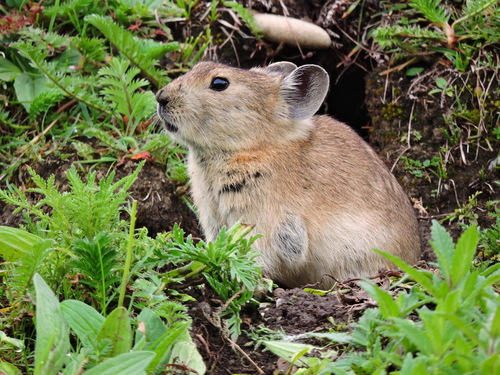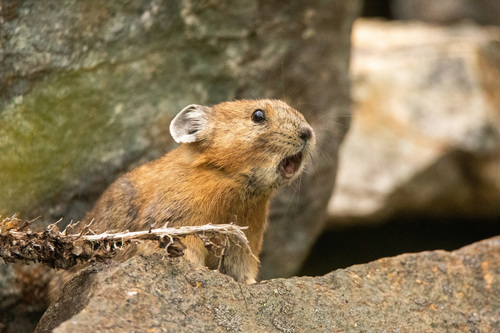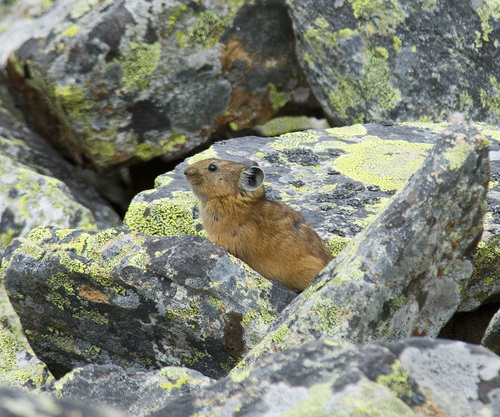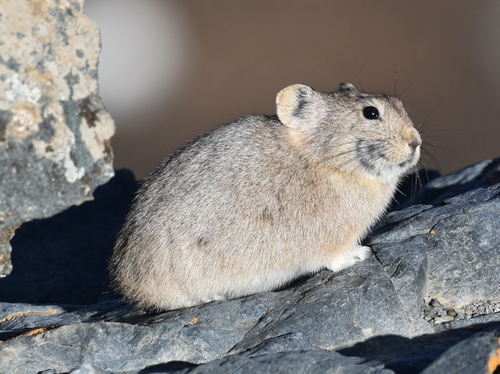
About Ochotona roylii (Ogilby, 1839)
Taxonomy and Common Name
Royle's pika, scientifically named Ochotona roylii (Ogilby, 1839), is the most common pika species found in the Himalayas.
Adult Body Length
Adults of this species measure 17 to 22 centimeters in length.
External Morphology
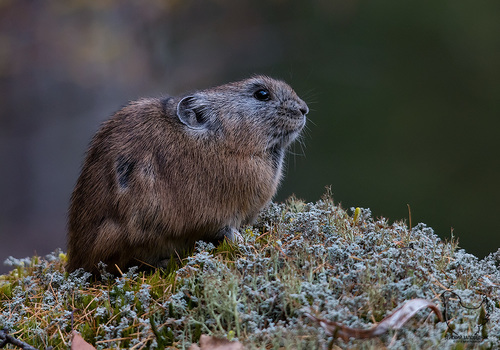
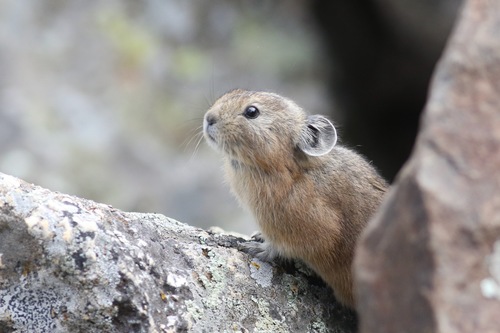
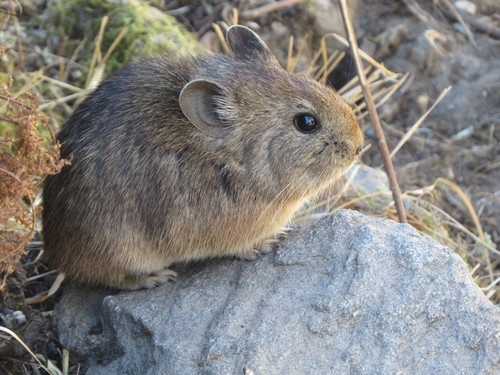
It has a slightly arched head, a rufous-grey body, a chestnut-colored head, and sparse hair in front of its ears.
Similar Sympatric Species
It can be confused with the large-eared pika, which lives in the same geographic area.
Primary Habitat Types
Royle's pika mainly inhabits open rocky mountain edges or slopes, or ground covered by conifer trees, including pine, deodar, and rhododendron forests.
Anthropogenic Habitat Association
It has also been found near areas where humans live.
Foraging Activity Pattern
It is a crepuscular foraging species, meaning it is inactive during midday hours.
Temperature Effect on Activity
This midday inactivity is worsened by rising temperatures, which cause heat stress for the species.
Monsoon Foraging Trend
Foraging activity increases during the monsoon season, when more food is available.
Nest Construction Behavior
Royle's pika does not build its own nest.
Nest Site and Materials
Instead, it uses narrow creeks and already existing burrow systems as nests, filling them with hay piles and pine leaves.
Predator Escape Shelter
It also uses rocky areas on mountains to take shelter and escape from predators.
Social Structure and Density
Typically, Royle's pika lives a solitary life, and has a low population density across its range.
Regional Population Density Data
In the Nepal Himalayas, its population density is 12.5 individuals per hectare; in the Garhwal Himalayas, it reaches 16.2 individuals per hectare.
Synanthropy Status
It is a synanthrope.
Food Storage Behavior
Unlike many other pika species, it does not often store food by building haypiles.
Annual Reproductive Output
Royle's pika produces 2 to 3 offspring each year.