About Occidryas chalcedona (Doubleday)
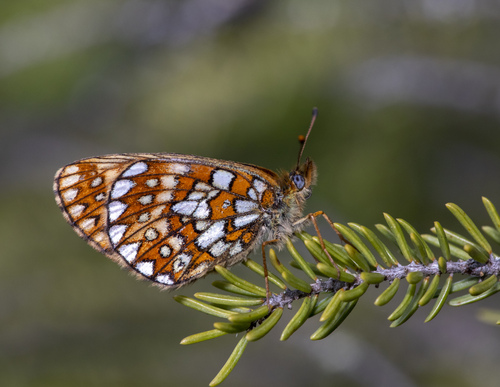
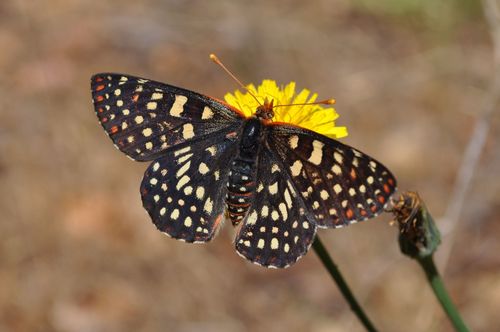
Scientific name: Occidryas chalcedona (Doubleday), commonly known as the variable checkerspot. The variable checkerspot usually has brown-black dorsal wings marked with extensive yellow, red, and white spots. The underside of its wings typically has yellow and orange bands. As its common name suggests, this butterfly species has highly variable appearance: dorsal background color ranges from brick-red with brown and yellow markings in populations from the Sierra region to yellow and black in northern Californian populations. Adult variable checkerspots have a wingspan of 3.2–5.7 cm, which equals 1.3–2.2 inches. This species looks very similar to Euphydryas anicia, and the only notable visual and structural difference between the two is the structure of the male genitalia. The variable checkerspot is distributed across western North America, with a range stretching from Alaska in the north to Baja California and Mexico in the south. To the west, its range is bounded by the Pacific Ocean, and it extends east past the Rocky Mountains into Montana, Wyoming, Colorado, and New Mexico. It occupies a wide variety of habitat types, including sagebrush flats, desert hills, prairies, open forests, and alpine tundra. The variable checkerspot lays its eggs in clusters. Pre-diapause larvae often move to fresher sections of the host plant they were laid on to access a better food source. Before entering diapause, larvae leave their food plant to search for more suitable dormancy sites, such as under the bark of dead branches, inside the hollow stems of dried weeds, and within rock crevices. During diapause, some larvae are able to wake and feed before going back into dormancy. Larvae emerge from diapause between late January and mid-March, though larvae at high elevations may hibernate for multiple years. Pupation starts in early to mid-April. Adult flight season begins between mid-April and May and continues into June. Adult variable checkerspots have an average lifespan of around 15 days.