About Notocitellus annulatus (Audubon & Bachman, 1842)
Size
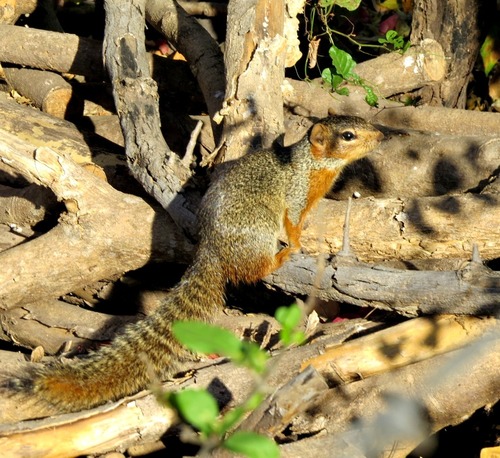
The ring-tailed ground squirrel (Notocitellus annulatus) has a total body length between 383 and 470 mm (15 and 19 in), with half of this length made up by the tail.
Morphological Comparisons
It is slightly smaller than the California ground squirrel (Otospermophilus beecheyi), and has more slender legs and broader, less pointed ears.
Dental and Oral Features
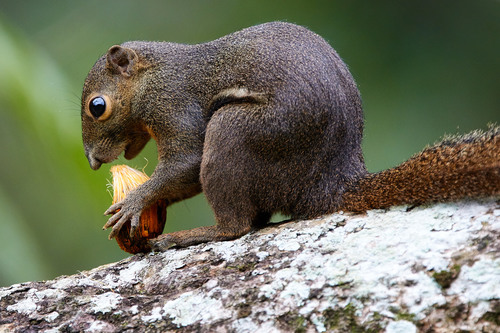
Its incisors are orange, and it has large cheek pouches that open inside the mouth.
Body Fur Coloration
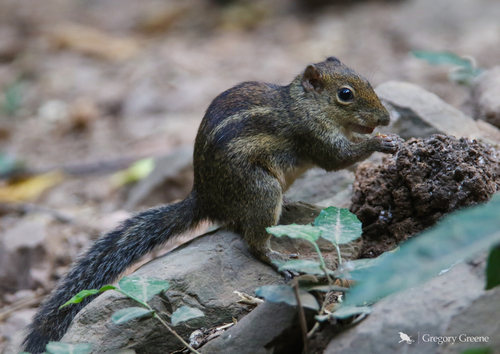
The crown of the head and upper parts of the body are covered in a mix of blackish-brown and buff hairs, while the chin, throat, and underparts are solid buff.
Tail Characteristics
The tail is slender rather than bushy, it is coloured a mix of buff and black on the upper side and brownish on the underside, and marked with around fifteen dark rings.
Geographic Range
This ground squirrel is endemic to western Mexico, where its range stretches from the State of Nayarit to the State of Guerrero.
Elevation Range
It is a lowland species that occurs at elevations up to approximately 1,200 metres (3,900 ft).
Habitat Types
It occupies a variety of different habitat types, including vine-covered deciduous forests, more open rocky slopes, the edges of cultivated fields, and oil palm (Elaeis guineensis) plantations where fallen palm fronds and mesquite scrub litter the ground.
Shelter Locations
Its burrows are often built in walls or dykes, or hidden beneath spreading cacti or scrub, and it sometimes lives in tree hollows.