About Notobubon galbanum (L.) Magee
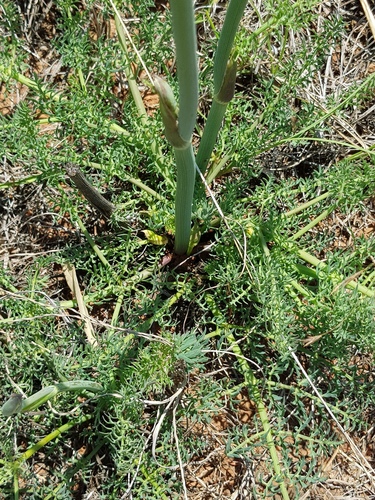
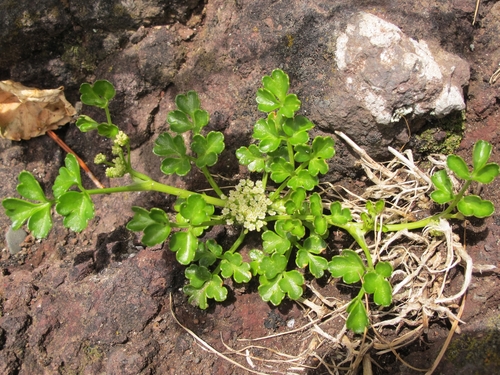
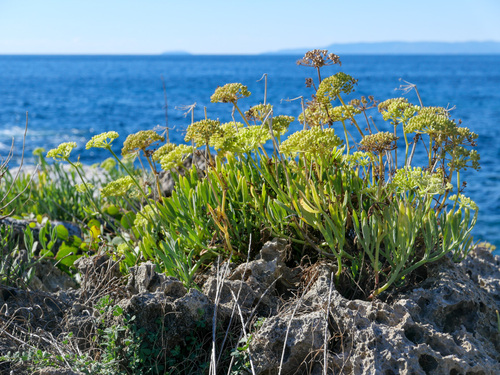
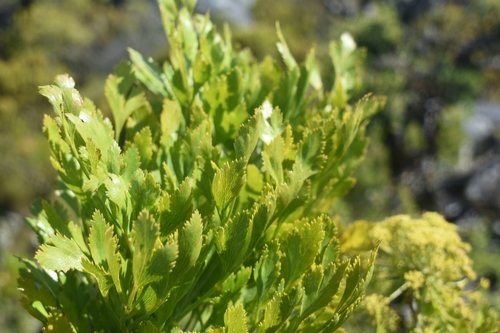
Notobubon galbanum, which was re-classified from the name Peucedanum galbanum in 2008, is commonly called the blister bush or hog's fennel. In Afrikaans, this species is known as bergseldery, meaning "mountain celery". This South African plant belongs to the family Apiaceae, subfamily Apioideae, and is most well known for causing painful blistering after skin contact. While it is in the same family as edible plants like carrot, and culinary herbs like fennel and dill, Notobubon galbanum is not edible. Touching it can lead to severe blistering, a reaction called phytophotodermatitis that occurs especially when the plant's irritant chemicals are exposed to sunlight. Blister bush is native to the Table Mountain and western Cape Fold Belt region of the Western Cape in South Africa. It typically grows at medium to high altitudes in partially shady, damp areas, but it can also grow at lower altitudes and in fully sunny locations. It grows in winter rainfall areas that are relatively frost-free and have well-drained soils. Despite its toxicity, Notobubon galbanum has been attributed to a range of medicinal properties. In traditional medicine of the indigenous peoples of the Cape, an infusion made from the plant's foliage is recorded as a diuretic, and used to treat rheumatism, gout, bladder ailments, water retention, and high blood pressure. This fynbos plant is undeniably attractive as a garden subject, but it is rarely propagated due to its phototoxic foliage. When it is cultivated, it prefers a relatively sunny position, but tolerates mildly shady or moist spots as long as the soil is well-drained. For safety reasons, cultivated blister bush should be planted in a location where it is unlikely to come into contact with human skin.