About Nothofagus obliqua (Mirb.) Oerst.
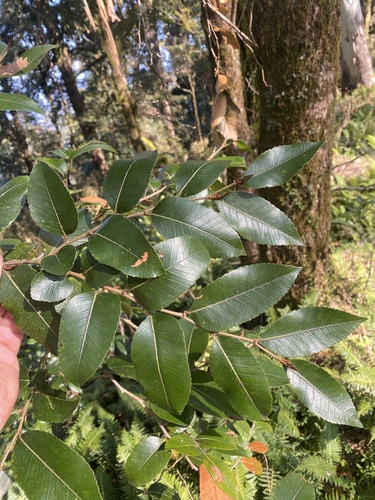
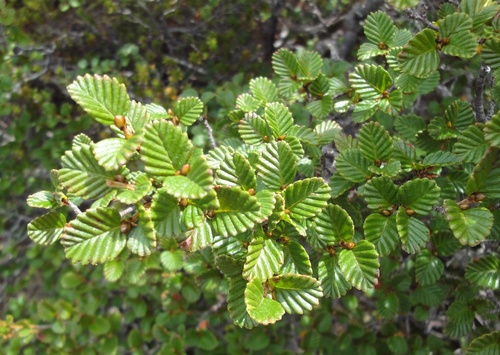
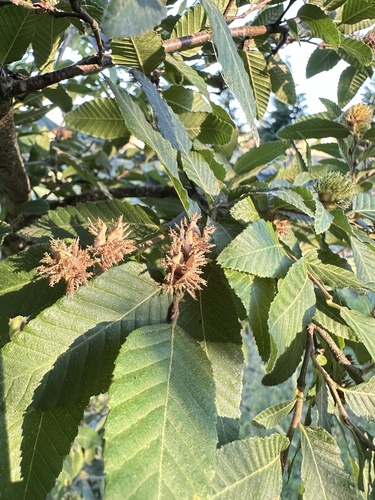
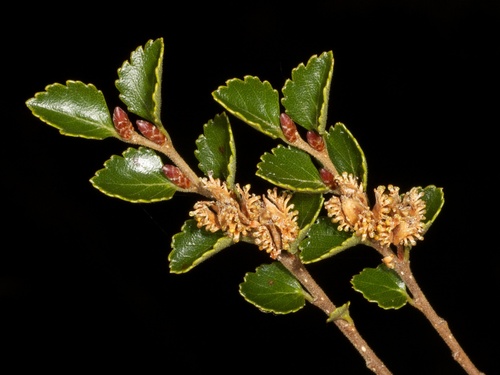
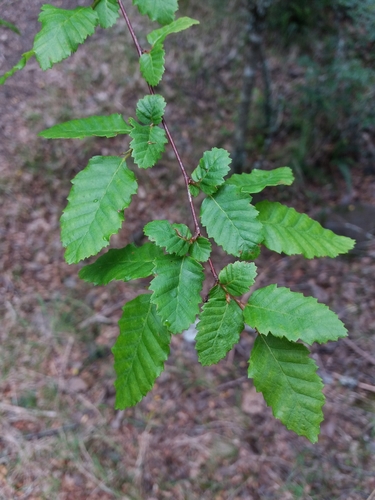
Nothofagus obliqua can reach 50 meters (175 feet) in height and 2 meters (6.5 feet) in diameter. Its trunk has greyish-brown to dark brown bark, and is often forked. Leaves grow in an alternate arrangement, with noticeable curling between the veins and serrated margins. This species produces separate small male and female flowers, both surrounded by green bracts and fairly inconspicuous. In Chile, young individuals with soft, yellowish wood are called roble hualle, while mature old trees that have developed characteristic reddish heartwood are called roble pellín. This tree has an attractive shape, and its timber is valued for durability; it is used for furniture making and construction. The species was first introduced to the British Isles in 1849. Cultivated material sourced from different native range locations was tested in cultivation in Scotland. Trees grown from material collected in Ñuble, Chile, the provenance closest to the Equator, suffered the most frost damage. Unfortunately, seeds from this Ñuble provenance were distributed to many commercial growers in the United Kingdom during the 1970s. Seeds sourced from Neuquen, Argentina produced the hardestiest trees. A selection from Malleco, Chile, which was the provenance of the first trees planted in the British Isles, also produced good hardiness results. This tree has also been planted on the North Pacific Coast of the United States. Experimental plantations established in Wales sustained severe damage during the 1981–1982 cold wave that passed through Britain.