About Nonagria typhae Thunberg, 1794
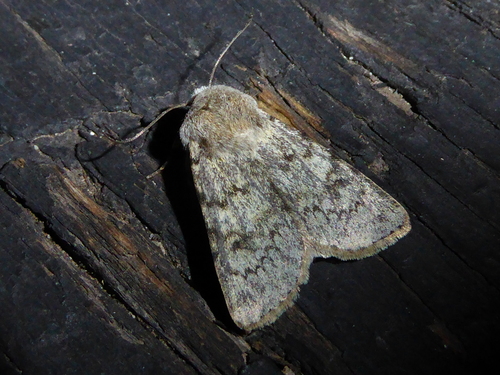
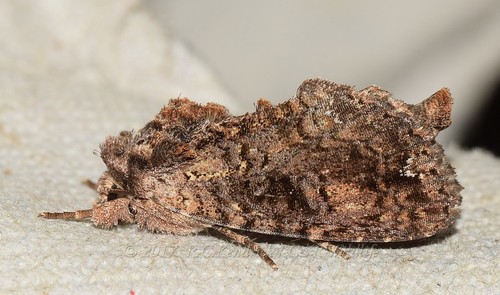
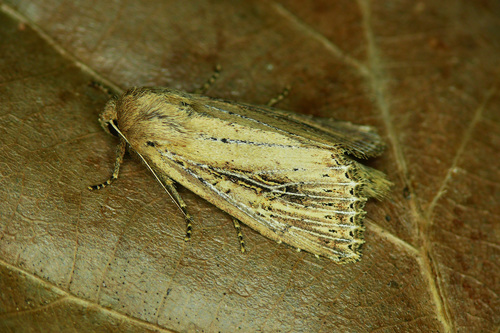
This species has a wingspan of 45–50 mm. Adult moths are on wing from July to October. As described by South (1907), the forewings, shown in Plate 144, Figure 5, are usually a pale whitish-brown colour; some specimens have a reddish tint, and some may be almost uniformly reddish-brown or blackish, which is classified as variety fraterna Treit. A row of black spots on the outer area of the forewing is wedge-shaped, and positioned just before the wing margin. The caterpillar is pale ochreous, with more or less pinkish tint, and has a paler line running along the spiracles. Its head and the dorsal plate on the first body segment are red-brown. Caterpillars develop within the stems of Typha plants from July to August. The moth generally flies in August and September. While adults can be caught with a net when flying at dusk or attracted to light, the best-condition specimens are obtained by rearing from the chrysalis. Chrysalids can be found in stems, preferably stems from the previous year, of reed mace, shown in Plate 148, Figure 3. The larvae feed on the stems of bulrush (Typha latifolia) and lesser bulrush (Typha angustifolia).