About Nolina interrata Gentry
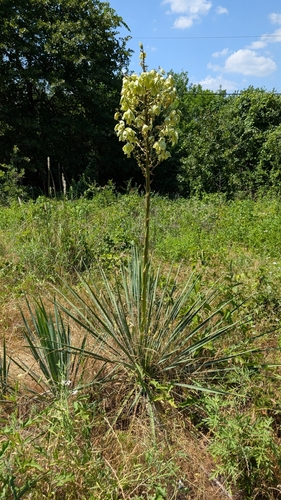
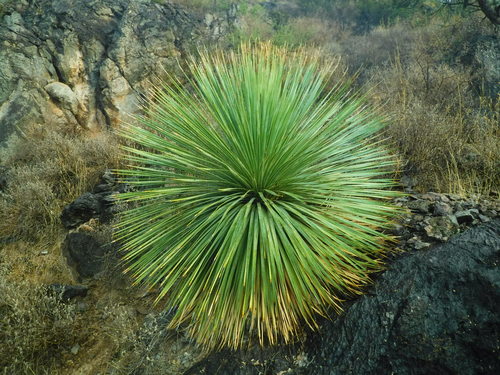
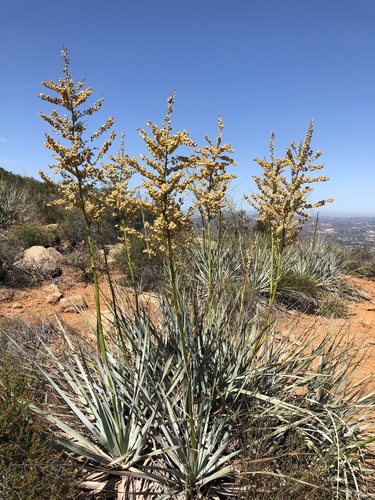
Nolina interrata Gentry is a rare species of flowering plant, commonly called Dehesa nolina and Dehesa beargrass. It is found at only around ten sites in central San Diego County, California, and has fewer than 100 individual plants growing across the border in Baja California. This species was first described in 1946, after it was discovered at its type locality near El Cajon, California. All of the individuals known to grow in California are located within a six-square-mile area near this site. While the species is rare, with a total global population of around 9,000 plants, it is relatively well protected in its native habitat, so a proposal to grant it federal protected status was withdrawn. This plant produces a branching stem, a portion of which grows underground. The stem is lined with rosettes made up of stiff, waxy, blue-green leaves, with up to 45 leaves per rosette. The leaves are thick and somewhat fleshy at their bases, and have shreddy texture and serrated edges. The plant produces an upright inflorescence that can reach up to 1.6 meters tall. The inflorescence bears branches lined with tiny flowers, each of which has six whitish tepals that are a few millimeters long. The fruit is a thin papery capsule that holds reddish brown seeds roughly half a centimeter wide.