About Noctua orbona Hufnagel, 1766
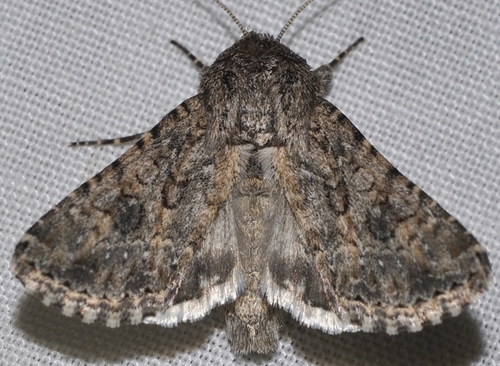
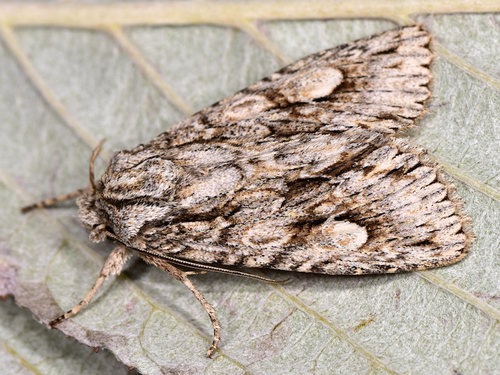
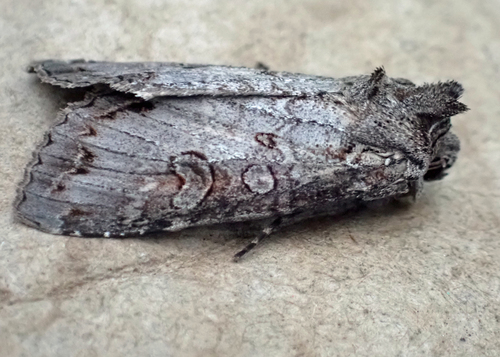
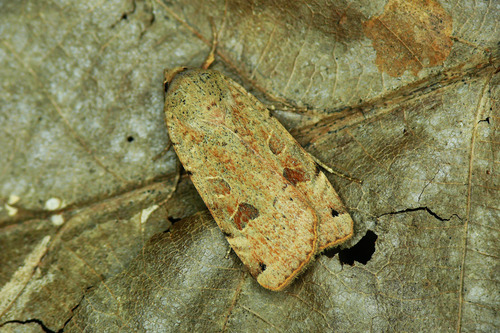
Noctua orbona, commonly known as the lunar yellow underwing, is a species of moth in the family Noctuoidea. This species is distributed across the Palearctic realm. Its documented distribution includes North Africa (Morocco and Libya), western, central, and southern Europe. To the north, its range extends to Scotland, southern Norway, central Sweden, and southern Finland. From the Baltic states, it ranges east through Russia to the Urals. In Asia, southern records of the species span Turkey, Syria, Lebanon, and Iraq, with questionable records extending to Iran, Afghanistan, and northern India. In the East Palearctic, its distribution covers Kazakhstan, Turkmenistan, Tajikistan, Kyrgyzstan, and Uzbekistan. The wingspan of Noctua orbona measures 38–45 mm. Its forewings have weakly defined lines, and their base colour ranges from leathery yellowish brown to reddish brown, with the marginal area often obscured. This species resembles Noctua comes, but can be distinguished by a consistent, characteristic ink-black spot on the forewing costa near the apex. Overall, it is a broad-winged species, and Central European populations are on average smaller than Noctua comes. The moth flies from June to September, with the flight period varying by location. The egg of this species is hemispherical with a flattened base. It is whitish when first laid, and turns orange shortly before the larva hatches. The egg surface is ribbed. Caterpillar colouration varies from ochre yellow to brown-grey. It has three whitish dorsal lines, with one black elongated spot on each body segment between the dorsal lines. The sides of the caterpillar are lighter in colour, with a wide reddish-grey lateral stripe. A black spot lined with yellow is present on the anal shield. The brownish head has a fine mesh pattern and two dark arc-shaped stripes. The brownish pronotum also features three pale longitudinal lines. The pupa is glossy brown to brown-red. The larvae feed on a variety of herbaceous plants and grasses.